

Beneath the Bombs: Unpacking NYPD Red 8 with Marshall Karp!


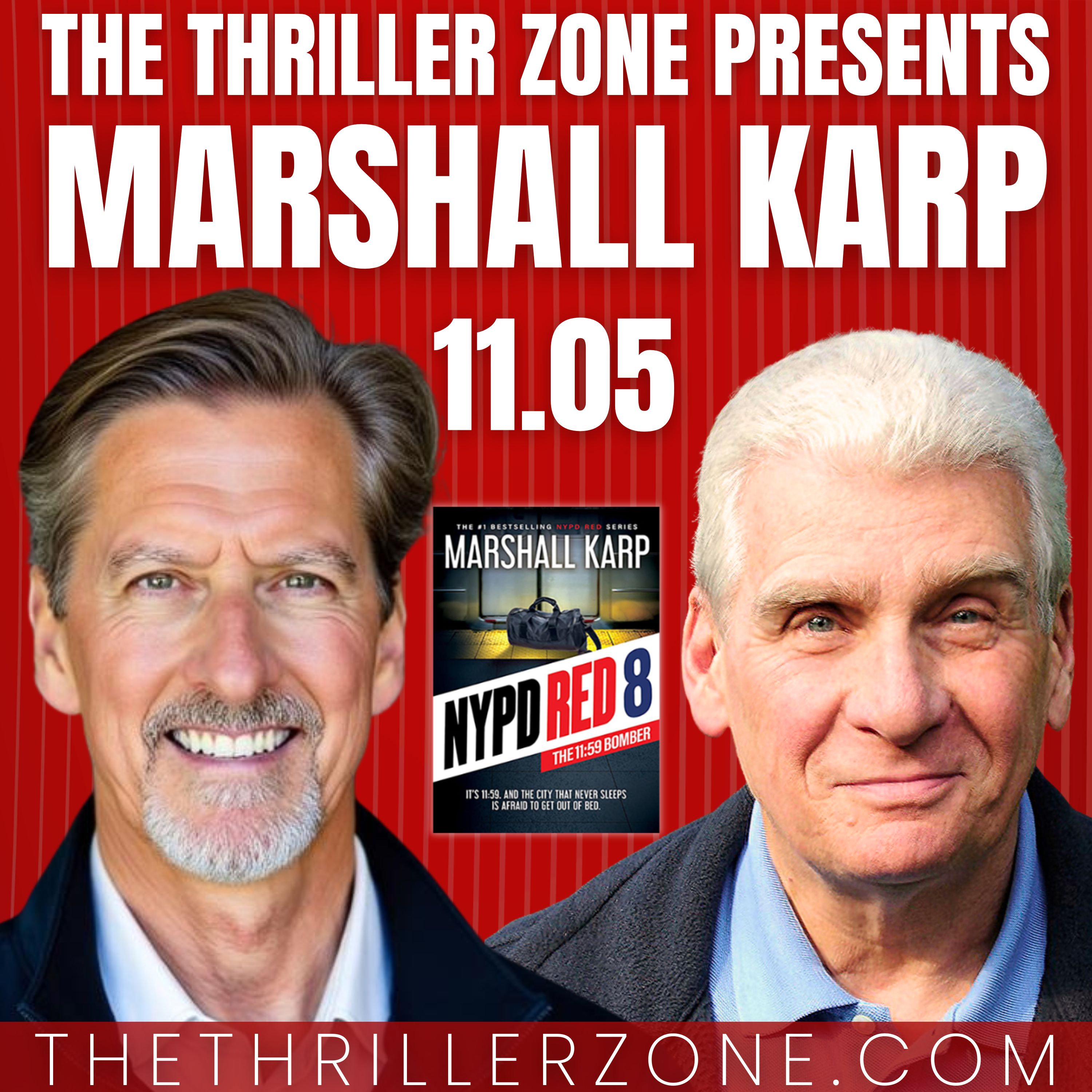
Welcome to The Thriller Zone with host Dave Temple, where today we’re diving deep into the thrilling world of crime fiction as we chat with the amazing Marshall Karp, the mastermind behind the latest page-turner, *NYPD Red 8: The 1159 Bomber*.
Today's episode is packed with fun and laughter, as we explore how Marshall crafts nail-biting plots while infusing them with heart and humor. He shares some behind-the-scenes stories about the creative process, including the challenges of collaborating with the big names in the writing game and how he keeps his characters fresh and engaging after eight books.
Plus, we tackle the technical side of podcasting—because who doesn’t love some good ol’ tech tips sprinkled in with our yarns?
So grab your headphones, sit back, and get ready for an entertaining ride filled with laughs, insights, and a whole lot of storytelling magic!
Takeaways:
- The latest book, NYPD Red 8, features a thrilling plot about a bomber wreaking havoc at 11:59 AM, keeping readers on the edge of their seats.
- Marshall Karp emphasizes the importance of having a reliable microphone and strong Wi-Fi connection to ensure a smooth podcast experience—technical difficulties be gone!
- Creating strong characters is essential for storytelling, as audiences return for the emotional connections they form with familiar faces and their journeys.
- Marshall shares valuable writing advice: write every day without worrying about perfection, because a professional writer is just an amateur who didn't quit.
- NYPD Red Series with James Patterson
KEYWORDS: NYPD Red 8, Marshall Karp, thriller podcast, crime fiction, bestselling author interview, writing tips, character development, book recommendations, plot twists, cinematic storytelling, writing process, collaboration in writing, emotional depth in fiction, crime writing techniques, series vs standalone novels, writing advice, storytelling craft, suspenseful narratives, author interviews, book launch events
00:00 - Untitled
00:04 - Introduction to the Thriller Zone
04:28 - A New Chapter in Writing and Friendship
09:48 - The Dynamics of Collaboration in Writing
19:07 - Crafting Continuity in Character Development
28:22 - Reflecting on a Writing Journey
Foreign.
Speaker AWelcome to the Thriller Zone.
Speaker AGuess who?
Speaker ADave Temple, your host.
Speaker ASo nice to have you here on today's show.
Speaker AMy dear, dear friend, Marshall Karp has a new book called NYPD Red 8, the 1159 Bomber.
Speaker AAs you can see, I enjoyed it.
Speaker AMade all kinds of notes.
Speaker AMarshall is.
Speaker AHe's fast becoming one of my best friends.
Speaker AHe's just a good dude.
Speaker ASo talented, and we have a lot of fun in today's show.
Speaker ANow, there are some technical difficulties throughout the show, and this is why I tell people when they go, Dave, what can I do to make my show the best?
Speaker AYour show the best?
Speaker AWell, here's an idea.
Speaker AHave a microphone that picks up your voice.
Speaker AA standalone microphone.
Speaker ALike, this is a good idea.
Speaker AHeadphones is a good idea.
Speaker AI'm not wearing them today because I don't need to, because I'm not talking to anyone.
Speaker AAnd.
Speaker AOh, WI Fi.
Speaker AA really good, strong signal, muy importante.
Speaker ABecause if you don't have that, well, sometimes.
Speaker ASometimes it just kind of stinks.
Speaker AYou know what I'm saying?
Speaker AAnyway, those are just tips here at the beginning of the show.
Speaker ABut Marshall Carp had a WI Fi challenge.
Speaker AIt comes and goes.
Speaker ABig deal.
Speaker AWho gives a.
Speaker AWe're having fun.
Speaker AThis book.
Speaker AWell, what can I say?
Speaker ALet's just say it's.
Speaker AIt's a hell of a read, and you're going to really enjoy it.
Speaker ABut what I need to do is shut my pie hole and get into the show, because this one is fun.
Speaker AStick around, bear through all the technical stuff, because you're gonna learn stuff.
Speaker AThis is one thing with Marshall, I'm always learning something.
Speaker ASo, without any further ado, New York Times number one bestselling author, Marshall Karp here on the thriller side.
Speaker AEnjoy.
Speaker ADude.
Speaker AYeah.
Speaker ALong time no see.
Speaker ALouis, compadre.
Speaker AHow are you doing?
Speaker BI would say I'm really good.
Speaker AYou haven't changed a minute.
Speaker AWhat's it been, a year?
Speaker AIt feels like it's been a year.
Speaker AHasn't been.
Speaker BNo, no, no, no, no.
Speaker BI think don't tell Me how to Die came out on March 4, and you and I met, like, on March 4 and a half or something like that.
Speaker AWow.
Speaker AYeah.
Speaker AOh, it's.
Speaker BReally.
Speaker AYeah.
Speaker AWell, let's just.
Speaker AYou know, I'm gonna.
Speaker AI'm gonna put this little prop up there.
Speaker BThe subtitle is more interesting than NYPD Red 8 has.
Speaker BNYPD Red has a fan base.
Speaker BNobody.
Speaker BNobody likes me, but they still think Jim Patterson writes the books.
Speaker BAnyway, it's NYPD Red 8, the 1159 bomber, which sort of gives you.
Speaker BOh, this is going to be interesting.
Speaker BThere's a bomber and he starts blowing stuff up at 11:59am One minute before noon.
Speaker BOn a daily basis.
Speaker BI'm not going out into the street between a quarter to nine and somewhere around dinner time, because holy crap, we know when the bomb's going off, but we don't know where.
Speaker BAnd it goes from neighborhood to neighborhood to neighborhood.
Speaker BAnd I remember when I was a kid growing up, we had a mad bomber in New York City.
Speaker BAnd I reference him in the book.
Speaker BIt took the cops 16 years to find this guy.
Speaker AWow.
Speaker BHis name was George Meteski, and he was a disgruntled employee of Con Edison, the electric company who basically, I think, didn't take care of their employees who were hurt on the job.
Speaker BSo.
Speaker BYeah, but he was.
Speaker BHe was.
Speaker BHe was crazy.
Speaker AYeah.
Speaker BWell, wait.
Speaker BHe was crazy.
Speaker BSo I'm writing about that.
Speaker BYeah, that kind of fits in with my style.
Speaker BYeah, I'm crazy is like my love language.
Speaker ACrazy like a fox.
Speaker AWell, now, hold on a second.
Speaker ANow we.
Speaker AWe're shooting out of the gate.
Speaker AI don't want to.
Speaker AI don't want to shoot out of the gate with all this.
Speaker AWe're going to get to this.
Speaker BOh, okay, okay.
Speaker AYou know, we're going to get to that.
Speaker BOkay.
Speaker BNo, well, but you got me started, so.
Speaker BTake two.
Speaker BForeplay.
Speaker BAnyway, I just.
Speaker BI fucking love to write.
Speaker BI love to hear from people who like what I write.
Speaker BBut I'm just having fun.
Speaker BAnd I want you to have fun.
Speaker BI want people to read the book.
Speaker BI want people to go to the library and take it out for free.
Speaker BI like to write, and I hope it shows.
Speaker AAll right, so you said earlier that you would actually.
Speaker AAnd you said this under the auspices of kind of like.
Speaker AI don't really want to say this, but I would write these books for free.
Speaker ASo is that you want to go on the record as saying you'd actually write, like, for instance, NYPD Red 8, the 1159 bomber.
Speaker ASo are you saying you might offer this for free or you're just saying you would like.
Speaker BOh, my problem is that my problem is always the uncomfortable balance between art and commerce.
Speaker BI write a lot of stuff for free.
Speaker BI don't want to get into the things that I have written for free, that have helped people, the world, whatever, and I do it because I can do it.
Speaker BBut I now have a publisher who plunk down money to get this into, you know, bookstores and libraries and, you know, all over the place.
Speaker BAnd they're not in business for love.
Speaker BYou know what they don't call it?
Speaker BShow friends.
Speaker AJerry.
Speaker BRight.
Speaker AOne of my favorite lines.
Speaker BI mean, it's so.
Speaker BBut if you said to me, would you help me write?
Speaker BBlah, blah, blah.
Speaker BOh, I mean, I cannot tell you how many father of the bride speeches I have written that, you know, people go, oh, thank you.
Speaker BYou tell me when I write you an email or a text or even an inscription, you don't feel like I phoned it in.
Speaker BYou feel like, this guy writes to me.
Speaker BThat's right.
Speaker AYeah.
Speaker ABecause I want to read an example of that on the little note that you put in my book, David, I hope you have as much fun reading it as I did writing it.
Speaker AHugs.
Speaker AKisses, Love, Marshall.
Speaker ACarp right there.
Speaker BOh, it says Marshall.
Speaker BIt doesn't say Marshall Carp.
Speaker BOh, the printed says, but it's just signed Marshall, like, warm.
Speaker BAm I right?
Speaker AWell, there's a great big heart that I was just assuming was Carp.
Speaker BNo, it's Marshall Hart.
Speaker BBut okay, anyway, so listen, let me.
Speaker AJump over here because otherwise, if I don't interrupt you, you'll just be talking to yourself all day long.
Speaker ASo we're gonna go back to you.
Speaker AAnd James started the series Jim Jimmy to his friends.
Speaker AHow did you navigate that creative handoff?
Speaker ABecause I don't know if I asked you this last time we talked, but I want to know how you hand handle that, that creative handoff and.
Speaker AAnd what was like one of the biggest creative.
Speaker ALet's go with creative differences and freedoms between collaborating and writing solo.
Speaker AAnd before you answer that, I want the reason I asked that.
Speaker AI was having dinner with a buddy of mine, Jack Stewart, who came into town last week, and we were talking about it and I said, you know, how is it writing with a collaborator versus on your own?
Speaker AAnd I thought, oh, I'm gonna ask the same thing, a Marshall, because you're talking about having written with one of the really big biggies.
Speaker AAnd I'm like, that had to have been its own unique experience.
Speaker ABut I also have gotten to know you pretty good, and you're kind of an opinionated, thoughtful guy with lots of.
Speaker AI don't know if I hit the word opinions enough, but.
Speaker ASo I'm curious as to what that was like, how.
Speaker AHow that handoff was and the pros and cons of duo versus solo.
Speaker BWhen you talk about collaboration, sometimes you talk about like, you know, Rogers and Hart or, you know, Roger Hammerstein or this guy and that guy.
Speaker BThey're kind of equal.
Speaker BI was collaborating with an 800 pound gorilla.
Speaker BAnd that's, that's a little different.
Speaker BI mean, Jim has a brand, he has style.
Speaker BAnd I knew that brand and he knew how he knew my writing.
Speaker BAnd but the interesting is like I came to him with the concept of NYPD Red, an elite task force who jumps in whenever a crime is committed against, and sometimes by the rich and famous.
Speaker BHe loved his publisher, loved it.
Speaker BI don't think this is, I think I've said this before.
Speaker BOriginally NYPD read the first book was going to be by Marshall Karp, you know, kind of presented by James Patterson.
Speaker BBecause I basically wrote the book and got Jim's feedback on it, but the publisher was so happy with it that they wanted to make it more co author and there goes art and commerce.
Speaker BSo I said yes.
Speaker BBut for the most part, you know, Jim is producing 30 books a year.
Speaker BSome he has to like be more involved with than others, but he was involved every step of the way.
Speaker BAnd so I had done a lot of this on my own with him basically approving or not approve it.
Speaker BAnd there were times when I would pitch a story and he would say, no, I don't like that.
Speaker BIn NYPD Red 7, which is the first book I wrote without, you know, just on my own.
Speaker BWithout his, without the gorilla.
Speaker BYeah.
Speaker BYou know, and you know, the, you know, we say that affectionately.
Speaker BI mean he, he's, he's the guy responsible for the James Patterson grant.
Speaker BAnd I introduced a character in NYPD Red 7, this 18 year old documentarian, Theo Wilkins, who may or may not be the illegitimate son of the detective who's the hero, Zach Jordan.
Speaker BNow I had pitched that idea to Jim and he didn't want that.
Speaker BHe wanted keep it clean, just focus on the heroes.
Speaker BAnd now in NYPD Read 7, we find out a lot about that relationship between Zach and, and, and, and Theo.
Speaker BAnd people were writing to me saying, well, what happens next?
Speaker BI want to know what happens with those characters.
Speaker BBecause that's.
Speaker AYeah, I was going to say we find out because when I, Yeah.
Speaker AThat when I got to the end, I'm like, oh snap.
Speaker AYeah.
Speaker BBut working with Jim for the most part was easy because we're both on the same mission.
Speaker BYou don't have to always agree creatively.
Speaker BI worked in television.
Speaker BSome people were impossible to work with because they had an agenda.
Speaker BMost people's agenda is like, oh, please God, don't let me get fired today.
Speaker BEspecially in the.
Speaker BYeah.
Speaker BAnd so a lot of people in the business that I worked with were like, well, I had the head of comedy at One point, comedy development at a studio.
Speaker BI worked for comedy was.
Speaker BHad an accounting degree.
Speaker BAnd he was promoted from business affairs to head of comedy development because one night they all went out and got drunk and he was very funny.
Speaker BI'm not kidding you.
Speaker BSo at least I respect Jim's point of view.
Speaker BThe very first book I wrote for him, which was not NYPD Red, which was don't, don't, which was kill me if you can, I resisted some of the.
Speaker BI resisted the Russian mob guy who was having an incestuous affair with his daughter.
Speaker BAnd then, you know, the first sex scene I wrote that wasn't the inside.
Speaker BHe goes, nah, I don't like the sex scene.
Speaker BAnd, well, he knows what readers want in a sex scene.
Speaker BSo we had a glass of wine.
Speaker BNo, I learned a lot from Jim.
Speaker BAnd I think if chapter one, 321 prologue, 321 pages, grabs you, you could read those two pages in a bookstore.
Speaker BYou can read those two pages in the library.
Speaker BYou go, like, you could call me on the phone and I'll read you those two pages.
Speaker BActually, you would do it better.
Speaker BBut it's a compliment to say that.
Speaker BAnd so we got to the point where I really wanted to take over the series and Jim was now branching out.
Speaker BHe was working with President Clinton and Dolly Parton and the estate of Michael Crichton and Jeffrey Epstein.
Speaker BIt was like he was beyond doing, you know, the sequel to NYPD Red.
Speaker BSo we, I wound up owning the property.
Speaker AThere you go.
Speaker BAnd it was.
Speaker BI mean, he did a video say, from now on, Marshall is writing.
Speaker BAnd I can't wait to read it because I'm going to be surprised at the ending.
Speaker BSo it was like, you learn a lot and then you go off into business yourself with the blessing of, you know, I could not do what Jim does, which is produce that many books a year, trusting a lot of other writers.
Speaker BI'm a different kind of writer.
Speaker BAnd that's why.
Speaker BThat's why I don't have a mansion in Palm Beach.
Speaker AAll right, so let's do this since we only have 30 minutes.
Speaker AAnd that was question two.
Speaker AAnd I've got 10.
Speaker ALet me get moving here.
Speaker ANot that we have to stick to my script, but because we often don't.
Speaker ABut I want to talk about the heart behind the action, because here's one things I've picked up from your books.
Speaker AThey're always there.
Speaker AThey always have great way to blend big scale cinematic plots, which is one of the reasons I like your writing, because you.
Speaker AWe write similarly, like cinematic.
Speaker AWhen I write, I see the picture.
Speaker AYou write the same way, but also it's the way you embed the very human relationships.
Speaker AThere's a lot of heart in there.
Speaker ASo I want to, I want you to tell my listeners how you balance that emotional depth with all that adrenaline fueled pacing, especially like you did with a prologue.
Speaker AHow do you do that?
Speaker AWhat's that?
Speaker BTalk to me in the simple answer.
Speaker BIt's two things.
Speaker AYou can get complicated if you need to.
Speaker BWell, I'm only on question three.
Speaker BI don't want to like being a television writer, being a film writer, having been in the advertising business.
Speaker BI don't think plot or I certainly don't think only plot.
Speaker BI think character.
Speaker BAnd I think two things.
Speaker BOne is what is going on in the heart and mind of my character right now as I write?
Speaker BBecause if this guy got punched in the face in chapter six and then I didn't get back to him till chapter 17 and that's been like two months.
Speaker BGotta remember that he just got punched in the face.
Speaker BYeah, he's still like, ow.
Speaker BAnd it sounds like, well, wouldn't everybody?
Speaker BNo, a lot of times you just forget.
Speaker BYou start writing what you want to write, not remembering how the character feels.
Speaker BWhat is going on?
Speaker BWhat is the character thinking?
Speaker BI mean, with Zach and with this kid Theo, Zack is going, do I talk to this kid?
Speaker BHe's already happy with the father he's got.
Speaker BWhat do I say?
Speaker BAnd the other thing is, years and years ago, working in television, I was asked this question by this brilliant guy who was very successful, Richard Dorso.
Speaker BWhy do people come back to the same show over and over?
Speaker BAnd it's simply because they love the predictable emotional experience they get from spending time with those people.
Speaker BAnd the example is Cheers or Seinfeld or Grey's Anatomy or any.
Speaker BThe plot changes every week.
Speaker BBut you don't remember all those plots of the Office.
Speaker BYou just remember that Michael Scott was such an idiot and Pam and Jim were so in love and they couldn't express it.
Speaker BAnd you know, and Mindy Kaling was all Mindy Kay.
Speaker BI mean, it was just.
Speaker BIt's the characters.
Speaker BI want to see them behaving.
Speaker BIt's like, why do you go out to dinner with the same people when you have a lot more friends on your, in your contact?
Speaker BWhy do you like, like to hang on the phone or do something with this guy or that guy?
Speaker BIt's because you enjoy that experience.
Speaker BAnd characters, characters give you that experience.
Speaker BSo the emotional hot buttons that you feel Is because in the middle of real life, people are real.
Speaker BAnd.
Speaker BAnd I can.
Speaker BI, I.
Speaker BIt's.
Speaker BI'm going to call it a gift that I can be in touch with that.
Speaker AYeah, well, and it's so funny to answer that question myself is as I get older, and especially having now gone through cancer and so forth, and it makes you realize how precious life is without getting too corny and how little time you got.
Speaker AAnd so really, when you think about it, and Tammy and I were talking about this over the holiday when we were on vacation, I, like, we.
Speaker AWe spend most of our time together, a very select few people.
Speaker AI'm going to your point.
Speaker ASo you find something in their character or their personality, the way they share their life with you, and you just want to hang out with them, and that's kind of the way that you're saying about your characters.
Speaker ALet me move along here.
Speaker AAll right, now let's talk about the craft of continuity, because again, eight books in this particular series keeping characters like Kylie and Zach, which, I mean, I love that.
Speaker AKeeping them fresh, that's no easy feat.
Speaker AI mean, come on.
Speaker AWe all know that as writers, but what's your process for tracking their evolution?
Speaker AAnd I kind of.
Speaker AI was looking at.
Speaker AI was.
Speaker AOkay, I was, you know, I was following you on Instagram and so forth and on Facebook, and I see where you were sitting.
Speaker AYou're right.
Speaker AAnd I'm like, does he have master boards in his office where he goes, like, here's the characters and here's their arc, and this is where they're going?
Speaker AAnd so do you, like, do you track their evolution?
Speaker ADo you keep long time, you know, in order to keep those longtime fans satisfied, or do you just, like, go with the emotion and what you recall?
Speaker BHow do you keep track of your life?
Speaker BI mean, how do you keep track of your friend?
Speaker BI mean, I remember the backstories when I was working with Jim, the editor at Little Brown would.
Speaker BThe copy editor.
Speaker BThere were no developmental editors.
Speaker BThe copy editor would say, um, well, in book four, they said they knew each other, you know, for 11 years.
Speaker BAnd now you're saying 12 years, but it only went from July.
Speaker BSo you have fact checkers, that kind of thing.
Speaker BBut also you feel a certain kind of confidence that that's not what the reader cares about.
Speaker BIf I accidentally, you know, say that, you know, we did this last year, and it was, you know, you do your best to keep the continuity, but that's.
Speaker BThat's not a problem.
Speaker BYou.
Speaker BI mean, you want to know.
Speaker BSo in Red 8, Kylie's husband, legally married husband appears.
Speaker BAnd I think he vanished at the end of Red four.
Speaker BAnd he was gone through five, six, seven, and he comes back and then I have to figure out how many years he's, you know, so you do a lot of, you know, there's no AI involved.
Speaker BIt's just police.
Speaker BIt's police work.
Speaker AWho was I talking to not long ago when they were talking about they.
Speaker AThey.
Speaker AI want to say maybe it was Kyle Mills.
Speaker AWe're talking about writing series versus standalones.
Speaker AAnd this person, whoever it was, said one of the biggest reasons they like doing standalones, it's two big reasons.
Speaker AOne is they don't want to keep track of all the characters and the timelines of a series.
Speaker AAnd number two was they said, I have so many fresh ideas at any given moment, then that why would I.
Speaker AWhy would I stay in one particular pot?
Speaker AI want to jump out of the pot to a new pot.
Speaker AAnd I.
Speaker AAnd I thought about that because I always thought, well, you know, you want to, you want to do a series because you know that's going to sell and so forth.
Speaker ABut really interesting take on that, I think.
Speaker BI've written several standalones and Don't Tell Me how to Die, Snowstorm in August, but I think a series because again, the predictable emotional experience of being.
Speaker BAlso, if you go into a publisher and, you know, here's the.
Speaker BThe book of my life where I was, you know, resurrected and, you know, and I won the lottery and this happened and that happened and they go like, you have six more like that.
Speaker BWell, no, it was one time, you know, No, I mean, publishers don't make a lot of money on the first book.
Speaker BWitness Slow Horses.
Speaker BNow, all that stuff that the television show has helped the book catch on the series and now you want.
Speaker BI think from a business standpoint, you have a better chance.
Speaker BIf people look at this and say, this could be a series, that's compliment to say this could be a series.
Speaker BIt means I, I don't care what the plot is.
Speaker BI want to be back with these characters.
Speaker BThey were so much fun.
Speaker BYou took me from page one to page 378 and I still want more of them.
Speaker AI love it.
Speaker AIt goes back to your very opening statement about being character driven.
Speaker AAnd we tune in for the familiarity and the attraction to the characters.
Speaker ANow let's talk about plotting the perfect crime.
Speaker AYou've written.
Speaker AYou've.
Speaker AWell, perfect Being Relative.
Speaker AYou've written complex thrillers that hinge on precision.
Speaker AAnd that's kind of one thing I pick up on.
Speaker AOn your stuff.
Speaker AAnd I. I like precision.
Speaker AI'm telling Tammy all the time.
Speaker AI like things that are precise about.
Speaker AI like people who really know their stuff, and they operate within that world with that same precision.
Speaker ANow, what's your system for building that layered mystery where you just stack it up, that it feels both unpredictable and inevitable?
Speaker AYou've got a really great way to do that.
Speaker BI don't know.
Speaker AOkay.
Speaker BDavid.
Speaker AI'm just damn good at what I do, and I just jump in there and I just.
Speaker BBut I think solving a crime in real life, committing a crime in real life, and solving a crime in real life takes planning and execution.
Speaker BAnd I work with a retired NYPD homicide detective.
Speaker BI've mentioned him.
Speaker BDanny Corcoran.
Speaker BDanny Corcoran.
Speaker BAnd Danny.
Speaker BI mean, the feedback that I am getting on NYPD Red 8 is so good because you did hit on an important thing.
Speaker BThe intricacy of how these crimes are going and how they're, you know, how it's evolving and it's really well thought out.
Speaker BThat's because I'm working with a guy who spent 24 plus years in the department, and he knows the ins and outs.
Speaker BIt's why so many cops are fans of NYPD Red and of Lomax and Biggs.
Speaker BBecause I understand Michael Connolly is great at this stuff.
Speaker AOh, yeah.
Speaker BYou know, I mean, there are.
Speaker BThere.
Speaker BMichael Connelly knows what he's doing when it comes.
Speaker BHe was a crime reporter, he's a journalist.
Speaker BSo I think partly it's all that attention to detail, because you have to respect that your audience is going to catch you if you get it wrong.
Speaker BAnd Danny is there to help me get it right and certainly keep me from getting it wrong.
Speaker AYeah, yeah.
Speaker AAnd you guys have been pals a long time, right?
Speaker AI mean, he's kind of there over your shoulder for years.
Speaker BIt was.
Speaker BAgain, you know, he had me at hello.
Speaker AAll right.
Speaker ALessons from a career in storytelling.
Speaker ALet's do this.
Speaker AYou, as you mentioned earlier, you've worn all these creative hats.
Speaker AI mean, at the young, ripe age of 49, you've managed to do all of this stuff, which is just amazing.
Speaker BI'm going on 126.
Speaker BI told you.
Speaker ATV films, novels.
Speaker AWhat lessons?
Speaker AAnd I'm particularly fascinated by screenwriting because I just.
Speaker AI love that world.
Speaker AWhat lessons from your screenwriting background?
Speaker ALet's take that little departure, for example.
Speaker AMost informed.
Speaker AThe way you write a thriller.
Speaker BKeep it moving.
Speaker BAnd just because two people are talking doesn't mean they should just be sitting there.
Speaker BTalking, Give them some business, put them in a garden, put them in a diner, put them in a car chase.
Speaker BI worked in a visual medium and I do my best to think visually.
Speaker BThat's, that's why I forget.
Speaker BI, I don't even know which book it was.
Speaker BI, it was six or seven.
Speaker BIt was, you know, they are.
Speaker BThe, the guy thereafter is, is in a blood mobile that was at, at, you know, Citi Field, met, you know, where the Mets play.
Speaker BAnd he was, you know, taking blood and the cops were after him, he jumped and he drives the bloodmobile like a maniac.
Speaker BAnd I'm thinking like, give me something that the best action directors would want to shoot.
Speaker BGive me stuff that lends itself to film.
Speaker BYou make it come alive.
Speaker BWhen you make it cinematic.
Speaker BYou're painting the picture without telling the reader.
Speaker BYou're painting a picture.
Speaker BGod, you could cut that out.
Speaker BIt took too long.
Speaker AYeah, I think I will, because that was all right.
Speaker BIf only people were watching this far.
Speaker ABut yeah, no, they left a long time ago.
Speaker AI want to do a little reflective thing.
Speaker AI want to get off your book for a second because these are the kind of questions that just every once in a while I like to ask for the pure of it.
Speaker AIf you could go back to your 15 year old self and just say, hey, listen, knowing what you know today, what would you go back and tell 15 year old Marshall as he was trying to figure out what he was going to do with his life, if indeed he was trying to figure that.
Speaker BOut at 15, I would say, schmuck, you like to write, don't you?
Speaker BAnd I write to pen.
Speaker BI was writing, I was writing short stories.
Speaker BMy high school English teacher told me.
Speaker BAnd yet I had decided that when I would go to college that I would actually go to college to become a dentist.
Speaker BBecause I didn't think there was.
Speaker BI thought writing was just something you did, like you, you know, nobody pays you to go home and eat dinner.
Speaker BNobody pays you to like, you know, take a nap.
Speaker ARight?
Speaker BIt was just.
Speaker BBut I would have really told my younger self, this is, this is not a job.
Speaker BThis is your calling.
Speaker BDon't, don't dick around for as long.
Speaker BNow, I did go for dentistry.
Speaker BI found myself in journalism in college, but I didn't know.
Speaker BAnd then I got into advertising, which is a business.
Speaker BI didn't know that the depth of creativity, I didn't know the well that was there.
Speaker BAnd so I spent a lot of years.
Speaker BIt wasn't until I was like in my late 30s and very successful That I did that classic, is this all there is?
Speaker BYou know what I really want to do in life?
Speaker BI want to write stuff that people listen to people read.
Speaker BI would tell him that you have something that you can haunt.
Speaker BI used to write stories in my head when I was five, six years old.
Speaker BI was actually in.
Speaker BI was go to sleep and I was now reading, reading books.
Speaker BAnd I was going to write a book that had cowboys and baseball players and mystery and Hardy Boys and cool stuff in it.
Speaker BAnd it was like.
Speaker BBut I never took myself seriously.
Speaker BAnd that would be a good thing to have known.
Speaker BAnd I don't know if I would have believed my older self, but that's what I would tell myself again, you know, hey, schmuck.
Speaker AAnd it's so funny.
Speaker AI was.
Speaker AAs you were telling that story, I think of Ted Bell, James Patterson, both said a similar thing.
Speaker AWe got up close to the top or at the top or over the top and realized, I mean, this is good and I'm making a shit ton of money and I'm having fun, but there's gotta be more.
Speaker AAnd it's so funny that all three of you said almost the exact same.
Speaker BThing, because in our hearts, we want to write.
Speaker BYeah, that's what we want to do.
Speaker BAnd yeah, my writing helped me become successful and get to the top of running a huge creative department.
Speaker BBut.
Speaker BBut it wasn't the.
Speaker BI didn't want to write for corporate America.
Speaker BI wanted to write for the rest of the world.
Speaker AThe book is NYPD Red 8, the 1159 bomber.
Speaker ABut you feel like you're going to get two books in one because there's 12 chapters at the end, 10, plus two preliminary chapters of Don't Tell Me how to Die.
Speaker ASo in case you didn't hear our former conversation back in March about Don't Tell Me how to Die, you can start the book here, read, of course this book and then go get that book.
Speaker ASo really, you can pre order this now, get that book, read them both back to back because that's how much carb you want at now.
Speaker BAnd if you hurry, if you order before midnight, I have these Ginsu.
Speaker BNo, I don't have any Ginsu knives left.
Speaker ARemember those?
Speaker AAll right, listen, closing comment.
Speaker AI know we mentioned this back in March, but for the listeners who have joined the show since that show premiered, best writing advice is kind of the button on the end of my show.
Speaker AEveryone gives their best writing advice.
Speaker ASo maybe it's changed since last we spoke, maybe it hasn't.
Speaker ABut if someone is sitting at home or driving a car or on vacation.
Speaker AAnd they're listening to this and they're thinking, geez, Dave, are you going to ask Marshall if he has a best piece of writing advice?
Speaker ASo give it to me, baby.
Speaker BRight?
Speaker BCrap.
Speaker BWrite a chapter of total crap.
Speaker BWrite another chapter.
Speaker BIt doesn't matter.
Speaker BThe only way you're going to get to a book that you can edit is to have something on paper.
Speaker BWrite every day.
Speaker BThink about writing.
Speaker BDon't worry if it's good or bad.
Speaker BDon't beat yourself up.
Speaker BJust write.
Speaker BDon't judge.
Speaker BWrite every day.
Speaker BAnd a professional writer is an amateur who did not quit, folks.
Speaker AYou would think his website was marshallcarp.com but don't let that fool you because it's carp kills dot com, dude.
Speaker AClosing comment.
Speaker AI loved the book.
Speaker AIt was so much fun.
Speaker ALike I said at the beginning, the prologue takes your breath away.
Speaker ABy the way, little sneak peek.
Speaker AI'm going to give you a little.
Speaker AThe very final chapter, the very last one before the, you know, the blurb on Don't Tell Me how to Die is almost equally as good as the prologue.
Speaker ASo I haven't.
Speaker AVery seldom do you see the bookends of a story start with a bang, literally, and end with a bang.
Speaker BCan I give a shout out to my, my developmental editor, Michael Carr, who said when I was writing that last chapter and he said, why don't you like parallel it to the prologue chapter?
Speaker BI went, ah, great, great idea.
Speaker AI don't see me here in the end of the acknowledgment.
Speaker BOh, that's going to be in the souvenir edition.
Speaker ASouvenir edition.
Speaker BNo, I didn't know you when.
Speaker BI didn't know you when I was writing that book.
Speaker AThis one.
Speaker AYou didn't know me then?
Speaker BNo, I was already finished when we met in March.
Speaker AWell.
Speaker ASo NYPD9, right?
Speaker AI will see you again down the road very soon.
Speaker AThank you for your time.
Speaker AIt's always a pleasure.
Speaker BIt's been terrific.
Speaker BAnd you know, when we're offline, we'll talk.
Speaker BBut I'm a big.
Speaker BI am.
Speaker BI am your biggest fan.
Speaker BYou are Me and Tammy, so.
Speaker AYou and Tammy.
Speaker BAnd thank you.
Speaker BThank your audience and for those of you who, for those of you who stayed, look under your seats.
Speaker BThere's a gift certificate to Taco Bell.
Speaker BAll right.
Speaker AAll right.
Speaker ASee you.