

Deck the Halls with Murder at the Christmas Emporium with Andreina Cordani


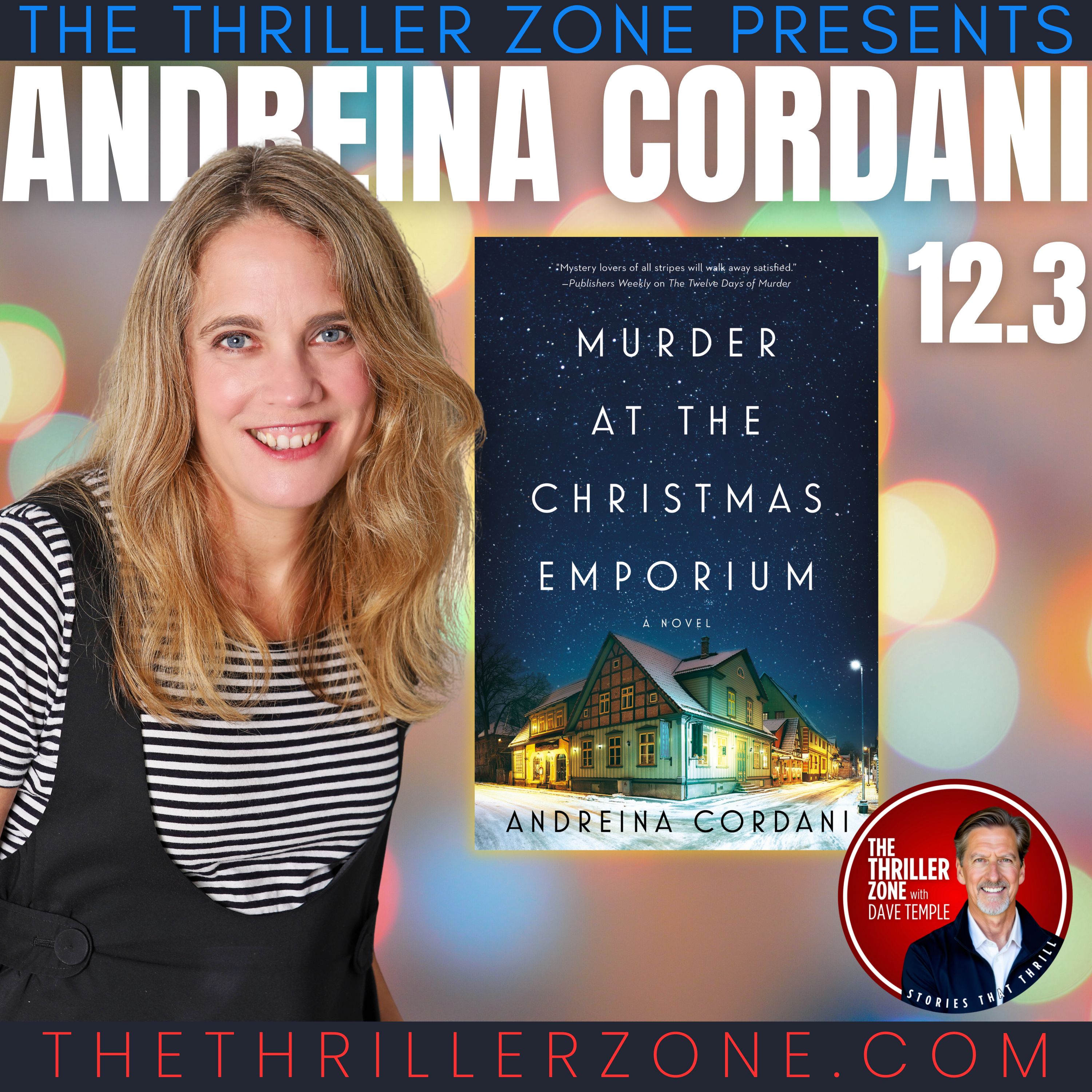
Murder at the Christmas Emporium is no ordinary holiday tale; it’s a locked-room mystery wrapped in festive cheer and dark secrets.
Join me, Dave Temple, as I chat with the incredibly talented Andreina Cordani about her latest novel, where a glamorous London department store turns into a chilling backdrop for a suspenseful whodunit.
We dive into the delightful contrasts between the glittering holiday spirit and the lurking shadows of betrayal, exploring how even the most luxurious places can hide sinister truths.
Andreina's knack for creating relatable yet flawed characters adds a razor-sharp realism to the narrative that keeps readers on the edge of their seats. So grab your favorite holiday drink, settle in, and let’s unwrap the layers of this intriguing story together!
Takeaways:
- In this episode, David Temple chats with Andreina Cordani about her thrilling new novel, 'Murder at the Christmas Emporium', blending holiday cheer with suspense in a captivating way.
- The discussion dives into how Andreina's journalism background contributes to the razor-sharp realism in her characters, making them feel alive and relatable.
- Listeners learn about the intriguing contrast between the festive setting of a London department store and the dark secrets that unfold within, creating a gripping narrative.
- Andrina shares her writing process, emphasizing the importance of character development and how real-life inspirations shape her stories.
- The podcast highlights the classic allure of Christmas ghost stories and how they intertwine with modern narratives, adding depth to holiday themes.
- Finally, Andreina offers valuable writing advice, reminding aspiring authors to push through self-doubt and just write, because without a draft, there's nothing to revise.
Links referenced in this episode:
Companies mentioned in this episode:
- Selfridges
- Waterstones
- Barnes and Noble
- Fortnum and Mason
- Cosmopolitan
- Good Housekeeping
- Conde Nast
Mentioned in this episode:
LIFE IN TWO COLUMNS AD
Buy LIFE IN TWO COLUMNS: Shit That Matters. And Everything Else on Amazon. It's only $8 for the ebook and $16 for paperback. Or get crazy, and go to DavideTemple.com where you can get the eBook AND Audiobook for only $20!
00:00 - Untitled
00:18 - Introduction to Andrina Cordani and Her Novel
03:19 - Exploring Bookstores: A Journey to London
06:00 - Exploring the Emporium: A Journey Through Design and Nostalgia
14:56 - Exploring the Dark Secrets of Characters
21:11 - Exploring the Complexity of Christmas
26:30 - The Evolution of Storytelling: From Christmas to Con Artists
36:35 - The Journey of a Writer
Speaker A
Hello and welcome to the Thriller Zone.
Speaker A
I'm your host, David Temple, and on today's show, I'm joined by the wickedly talented Andrina Cordani.
Speaker A
She's an author who knows exactly how to turn Christmas cheer into chilling suspense.
Speaker A
And her new novel, Murder at the Christmas Emporium, takes us into a glittering London department store where luxury, nostalgia and danger collide.
Speaker A
It's part locked room mystery, part psychological puzzle, and entirely impossible to put down.
Speaker A
Andreen, whose background as a journalist gives her stories that's razor edge realism.
Speaker A
Her characters feel as if you might have stood behind them in line at Selfridges, never guessing what they're capable of.
Speaker A
We're talking about the seductive power of secrets, the dark side of the holiday season, and why sometimes the most dazzling places hide the deepest shadows.
Speaker A
So pour a mug of something strong, plug in those fairy lights, and join me as we unwrap Murder at the Christmas Emporium with the brilliant Andrina Cordani.
Speaker A
I like your sweater.
Speaker A
Very festive.
Speaker B
No, I've lost the hair.
Speaker A
Oh, I don't know.
Speaker A
It looks pretty good.
Speaker A
All right.
Speaker B
Your podcast, loads of fun.
Speaker B
Anyway, I've been listening to it and.
Speaker B
Yeah, you have a great time, don't you?
Speaker A
I do.
Speaker A
Thank you so much for saying that.
Speaker A
And I'm amazed at how many people will come on the show and they go, what's the name of the show again?
Speaker B
You actually read the books, too.
Speaker A
I mean, I know, right?
Speaker A
It's.
Speaker A
It is an occupational hazard.
Speaker A
Now, what has happened is.
Speaker A
Andrea, if I can say this is the.
Speaker A
It's been at.
Speaker A
What is this?
Speaker A
I'm at four and a half year.
Speaker A
Four and a half years now.
Speaker A
And Daddy needs to spend more time on his books.
Speaker B
Yeah.
Speaker A
Daddy's working on his right now.
Speaker B
I don't know why.
Speaker A
I love talking about myself in the third person.
Speaker B
In the third person thing.
Speaker B
I think.
Speaker B
Yeah.
Speaker B
Okay, if you're saying you haven't read the book, that's fine.
Speaker A
No, I have.
Speaker B
Okay, cool.
Speaker A
I love it.
Speaker A
And I'm.
Speaker A
Matter of fact, let's go ahead and start right now.
Speaker A
Welcome to the show, Andrina.
Speaker B
Hello.
Speaker A
You know what I loved about the we're talking about Murder at the Christmas Emporium.
Speaker A
I love how it starts off and it's like everything is so lovely and charming.
Speaker A
Yes.
Speaker A
And all of a sudden, things go awry.
Speaker A
All right.
Speaker A
I've got so much to say about this.
Speaker A
First of all, who in the wide world of sports does not like a good bookstore, right?
Speaker B
Yeah, I absolutely love a good bookstore.
Speaker A
My wife and I Were just friends.
Speaker A
I know.
Speaker A
It's like the best place to hang out, as long as they serve coffee.
Speaker A
So my wife and I were up in.
Speaker A
We.
Speaker A
We went to London recently.
Speaker A
My very first time.
Speaker A
Loved it.
Speaker B
Oh, cool.
Speaker A
God, I love London.
Speaker A
I'm like.
Speaker A
I loved it so much.
Speaker A
When we came back, I said, we may have to have a second home there.
Speaker A
I loved it that much.
Speaker B
Good luck with that.
Speaker A
Yeah.
Speaker A
Okay.
Speaker B
Most people can't afford a first time now, unfortunately.
Speaker A
Well, I'm gonna do my best.
Speaker A
Anyway, here's.
Speaker B
Yeah, you do your best.
Speaker A
We went to two bookstores.
Speaker A
God, I really wanted to impress you to.
Speaker A
That I would remember the names something Stone, Gladstone, Heartstone.
Speaker B
Waterstones.
Speaker A
Waterstone.
Speaker B
Yeah.
Speaker B
Yeah, that's Bas.
Speaker B
I'm trying to think of the equivalent.
Speaker A
Barnes and Noble.
Speaker B
Barnes and Noble, Yeah.
Speaker A
Yeah, I'm gonna lead with that.
Speaker A
But I'm gonna say my favorite was a place called.
Speaker A
Starts with an F. My wife has the memory foils.
Speaker A
Yes.
Speaker B
Yeah, yeah.
Speaker B
So that's.
Speaker B
Foyles, on Charing Cross Road is the biggest.
Speaker B
One of the biggest bookstore.
Speaker B
Well, it was the biggest bookstore in the country for a long time.
Speaker B
It used to be run by quite an eccentric lady who was.
Speaker B
Had very particular ways of running things.
Speaker B
But she's not with us anymore, and it's.
Speaker B
And now it's still just like this enormous kind of temple of books just off Charing Cross Road.
Speaker B
Charing Cross Road is the best place for bookstores in London.
Speaker B
Definitely.
Speaker A
There is something I'm gonna.
Speaker A
And I'm gonna get to your book, so bear with me.
Speaker A
But I'm trying to.
Speaker A
I'm sharing some backstory because there, first of all, the people are so lovely.
Speaker A
I found myself apologizing that I was an American so many times.
Speaker B
Well, the apologizing is very British, so you're fitting right in.
Speaker A
Oh, okay.
Speaker A
Well, it had to do with politics, which I won't go into right now.
Speaker B
Yeah, I know.
Speaker A
Yeah.
Speaker A
But there was another one more store starts with an.
Speaker A
It's another.
Speaker A
It's another F. It's a huge department store.
Speaker A
Very.
Speaker A
Or was it a V?
Speaker A
Anyway, very fancy, great restaurant downstairs where we got a.
Speaker A
Thank you.
Speaker A
Fordham and Mason.
Speaker B
Yeah, well, I've heard of that one.
Speaker B
Yeah.
Speaker A
That's my wife in the next room.
Speaker A
Anyway, reason I love all these stores is a bit unlike those in America.
Speaker A
You feel like you're stepping into an adventure.
Speaker A
And this is what I'm getting at.
Speaker A
When I read this book, it was all that nostalgia that I remember when I was a kid, when mom would take us to bookstores and.
Speaker A
And, you know, it was on a Saturday, and they'd say, okay, we have like $3, and this is your allowance, and you can get anything you want in the store, you know.
Speaker A
Right.
Speaker A
Well, yeah, honey, that was a long time ago.
Speaker A
We won't say that's.
Speaker A
It's.
Speaker A
It's.
Speaker B
Yeah, we'll draw a veil over that.
Speaker B
That's fine.
Speaker A
Yeah.
Speaker A
But the point being is we went right to the books, of course, but then the toys would get our attention.
Speaker A
But this reminded me of that, the charm of the Christmas holidays and all that stuff.
Speaker A
But then on top of that, folks, and this is what I loved about it so much, then you start going down this dark rabbit hole.
Speaker B
Yeah, it gets pretty dark.
Speaker A
The Emporium is.
Speaker A
Is a character in and of itself in the story.
Speaker A
That's what I loved about it.
Speaker A
You know, it's.
Speaker A
It's.
Speaker A
You know, I'm thinking about just so many different bookstores I've gone through.
Speaker A
So it's lush, it's inviting, it's a little bit claustrophobic.
Speaker A
So what I want to get out.
Speaker A
Start out of the gate with what's your process in designing that space?
Speaker A
And how did you balance that magical toy shop wonderland with that feeling of creepy horror?
Speaker A
Yeah, that's like in.
Speaker A
Beneath the decorations.
Speaker B
That part of the job was absolutely massive fun.
Speaker B
I really enjoyed it.
Speaker B
And I think.
Speaker B
I think I had a head start because I decided right at the beginning that I wanted there to be lots of Victorian clockwork toys.
Speaker B
And nothing's as creepy like Victorian clockwork toys.
Speaker B
They are super creepy.
Speaker B
So for those readers that don't know the sort of.
Speaker B
The premise of the book, there are seven strangers have been invited to an exclusive shopping event on Christmas Eve at this very.
Speaker B
A very famous store that's kind of.
Speaker B
It's reopened in a big sort of fanfare, and there's like a Willy Wonka type owner.
Speaker B
And the seven.
Speaker B
These seven VIPs have been invited.
Speaker B
But then when they've.
Speaker B
When they start to.
Speaker B
That they basically, they have a wonderful evening and then they fall asleep, and then when they wake up, they can't leave the store.
Speaker B
And there's a body in Santa's grotto.
Speaker B
So, yeah, it does.
Speaker B
It gets dark fast.
Speaker B
But it's kind of like creating the Emporium was the most fun ever because.
Speaker B
Because I could throw in my creepy automata.
Speaker B
I could chuck in a ghost story.
Speaker B
I love chucking a story.
Speaker B
And I could also have lots of kind of dark corners.
Speaker B
I had actual gas lights and I had, you Know this Willy Wonka type owner of the store who I just had really good fun creating because he's just really annoying.
Speaker A
Montague Verity.
Speaker A
I loved him.
Speaker A
He was.
Speaker A
I was gonna say Willy Wonka too, because there's something that, you know, there's charming and then sinister.
Speaker A
You feel like a.
Speaker A
A cross.
Speaker B
That's what Wonka's like.
Speaker A
Yeah, I know, I know.
Speaker B
I always felt Gene Wilder freaked me out as a kid.
Speaker B
It's like this guy's just gone up a pipe and you're singing about the world of pure imagination.
Speaker B
That's just freaking me out.
Speaker A
Yeah, yeah.
Speaker A
It's like, you know, when you made a comment about the clocks, it reminds me of those really creepy ass dolls.
Speaker A
Those porcelain dolls with the eyes that go twink, twink, twink.
Speaker A
And then I think about like it, the Stephen King story where you have a clown that.
Speaker A
Who doesn't like a clown until the clown does that little funky, you know.
Speaker B
And you're like, I think pop culture has ruined clowns now.
Speaker B
And dolls too.
Speaker A
Yeah.
Speaker A
When you have a serial killer that's known as a clown, you know that you've jumped the shark.
Speaker A
Right.
Speaker A
All right, so I love how you.
Speaker A
By the way, I wanted to say this, folks, in case you're worried that maybe it feels a little Saw esque.
Speaker A
It's not as dark as Saw.
Speaker A
I remember the first time I saw that first Saw and I'm like, all right, who came up with this craziness?
Speaker A
And then they're like 8 or 9 or 10 in.
Speaker B
But yeah, so that's, that's not my scene at all.
Speaker A
No, that ain't your jam.
Speaker B
No, no.
Speaker A
Now let's talk about the thread of like past histories and secret connections.
Speaker A
Flashbacks, you real reveal these layers of betrayal that kind of shift the genre.
Speaker A
And anybody who can take a genre that you think, oh no, I got this, I got this.
Speaker A
And then you turn it on its head and you're like, oh, well, I didn't see that coming.
Speaker A
So at what point did you decide that it would be more fun than just this festive whodunit?
Speaker B
I just can't resist a flashback.
Speaker B
Yeah, yeah, I just.
Speaker B
And I love.
Speaker B
Because all my characters are awful.
Speaker B
I mean, even the protagonists are pretty flawed and.
Speaker B
But I am just.
Speaker B
I was born, I was cursed slash blessed or whatever with this feeling that I can always see the good in people.
Speaker B
That makes me sound really saccharine.
Speaker B
But I'm not.
Speaker B
But I mean, I just like these people anyway, even though they're awful.
Speaker B
And I just wanted to sort of delve more into their histories.
Speaker B
And.
Speaker B
And it was just.
Speaker B
It was actually good to.
Speaker B
To break away from that scene as well, because they're stuck in this department store the entire time.
Speaker A
Yeah.
Speaker B
And it was nice to kind of be able to break out from it and, you know, travel back to the roots of their demise, really, and figure out what they'd done wrong or what they had.
Speaker B
What they had done to bring them to the emporium that night.
Speaker B
And it's much better to do it in flashbacks.
Speaker B
I find much more effective and more fun to kind of walk around in their shoes for a bit than to have them explaining it or telling the story in dialogue, because that just becomes long and drawn out.
Speaker B
And, you know, and you.
Speaker B
And also.
Speaker B
So you're seeing it through the lens of that person telling the story and dialogue rather than, you know, what they actually would.
Speaker B
The sneaky things they were actually doing that they don't want to admit to.
Speaker A
You know, so funny.
Speaker A
I think about how many movies.
Speaker A
And, you know, we're coming up on the holiday, so you see all these movies that take place in department stores and all the hijinks that ensue, but this, folks, is.
Speaker A
This one's a little bit different.
Speaker A
And this.
Speaker A
I know the book has been released for quite some time.
Speaker A
It's been.
Speaker A
By the time this show airs, which will be a couple of weeks from now, I want to kick off the.
Speaker A
The holiday with this.
Speaker A
I'm going to kick off December with this show because I just think it's a great way to start the holidays.
Speaker A
Although some people would say, well, Dave, the day after Thanksgiving really starts the holidays.
Speaker A
Or if you watch mass media, the Christmas trees are going up the day before Halloween.
Speaker B
The day after Halloween.
Speaker B
Yeah.
Speaker B
I was in San Diego one year for Halloween, and then the next day I went to a shopping mall, and it was full of little animatronic Santas.
Speaker B
They must have, like, the elves must have been out overnight filling the shopping malls with the little Santas.
Speaker A
Well, if it was San Diego, they were either sipping on some nice West Coast IPA or doing some other little habits that would entice creativity.
Speaker A
But, yeah, we're surfing.
Speaker B
You mean surfing, don't you?
Speaker A
Surfing.
Speaker A
Surfing is what I meant, of course, with a board.
Speaker A
So the.
Speaker A
Your characters repeat respond to this VIP shopping event.
Speaker A
The idea that someone knows all their dark secrets is central.
Speaker A
So this is what really.
Speaker A
This is when I realize, Andrea, what a. Andrina.
Speaker A
What a real psychopath.
Speaker A
I'm sorry.
Speaker A
What a creative individual you are.
Speaker A
Because it's like, how do they know the dinner, the inner dark secrets.
Speaker A
That creep factor right there is just delicious.
Speaker A
So, you know, what was your process of choosing.
Speaker A
Let's go with, you know, what kinds of secrets to explore.
Speaker A
Did, did you draw inspiration from real life observations of how people curate their image at Christmas, or did you just go into the twisted closet called your mind twisted closet?
Speaker B
No, I kind of.
Speaker B
It's like the most obvious one I can explain is Fran's secret.
Speaker B
But nobody knows Fran's secret at the beginning, so I don't want to do it because the spoilers.
Speaker B
But I, I listen to a lot of podcasts about this particular subject and it always fascinates me.
Speaker B
And to be honest, all of the characters really fascinate me.
Speaker B
Like, just.
Speaker B
I'm really interested in liars.
Speaker B
I kind of, I'm really, I find it really hard to lie myself.
Speaker B
And even though I make up stuff for a living.
Speaker A
Yeah, I was gonna say you're kind of a professional liar.
Speaker B
Aren't professional liar, but yeah, in my, in my day to day life, I find it really hard to keep secrets.
Speaker B
I find it really hard to lie.
Speaker B
I feel the need explain everything all the time.
Speaker B
And just this idea of people living a pretense or putting up a false front or, you know, being an out and out con person, that those sort of things really intrigue me.
Speaker B
And so I went down a rabbit hole and there were.
Speaker B
There's obviously so many different ways that people can lie and so many deceptions and everything.
Speaker B
And a lot of them are deceiving themselves as much as anything else.
Speaker B
And it just, it was the lying really that I suppose drew me in and the manipulation as well, because that's a common theme in the book, is there's lots of manipulation going on.
Speaker A
Yeah.
Speaker A
I would be lying if I said that I did not think of two particular people in my past.
Speaker A
I won't say their name's Richard and starts with an A, but they were, what would you call pathological liars kind of con men to the nth degree.
Speaker A
And I always found this fascinating.
Speaker A
Right, and which is more fascinating, the fact that they go through life doing that or the fact that they go through life doing that without thinking they're doing anything wrong?
Speaker B
Yeah, because they never admit it.
Speaker B
They would never.
Speaker B
Like, you know, if you, you see these people, you know, you watch true crime documentaries or whatever, and these people are now in jail and they are still saying, no, I didn't do that thing.
Speaker B
That wasn't me.
Speaker B
And you know, they've been convicted of it and you know, their accounts were found to be stuffed with money or whatever.
Speaker B
I just like.
Speaker B
Because I always want to know what makes them do it.
Speaker B
And they are never going to tell you because they don't really know themselves.
Speaker B
They're just driven to do it.
Speaker A
The.
Speaker A
I'm going to go back to Montague.
Speaker A
Was he originally conceived as a showman turned.
Speaker A
I'd call it showman turned predator, or did that evolution?
Speaker A
And I'm just curious.
Speaker A
The reason I asked certain questions is I just love breaking down.
Speaker A
I love trying to figure out, all right, where did she do.
Speaker A
Where did she come up with that?
Speaker A
And how did.
Speaker A
What was the mechanism there?
Speaker A
And what was her fascination with that particular thing?
Speaker A
So I'm really trying to figure out, was he originally.
Speaker A
Did you originally pop in your head, showman term predator, or really more just kind of.
Speaker A
Oh, well, he started out charming and nice and sweet, and then I just had him evolve into a real whack job.
Speaker B
I don't even know if he is a real whack job, but I think readers can make up their own minds.
Speaker B
But I think you're sort of.
Speaker B
I. I do love the way you talk about this because it implies that I did something on purpose.
Speaker B
But, yeah, like, there was all a grand master plan.
Speaker B
The thing is, I. I created.
Speaker B
I wrote about.
Speaker B
Started writing about the Emporium.
Speaker B
And originally there it was just going to be the shoppers, and then the staff just disappear, you know, and then they can't find anyone.
Speaker B
But then that was like.
Speaker B
Like he just.
Speaker B
When.
Speaker B
As soon as I started writing him, it added so much more menace to the beginning of the story.
Speaker B
And it added, you know, a kind of.
Speaker B
There's a lot of.
Speaker B
The problem with whodunits when, you know, the kind of whodunits where you're trapped with a killer and.
Speaker B
And someone's picking you off one by one, is that, yes, the characters are awful, but there's no antagonist.
Speaker B
And I think Monty was like a really fun kind of sort of semi antagonist to have at the beginning where, like, my main character Mary, obviously dislikes him on sight because he's just so annoying.
Speaker B
And so I'm just being reminded of a joke that made me take out.
Speaker A
But he was like, what was the joke?
Speaker A
Please do.
Speaker B
It wasn't.
Speaker B
It was a silly joke.
Speaker B
But he had like this.
Speaker B
He was nagging her all the way through in the beginning, in the first draft, and he kept calling her Bob and he was saying, hello, Bob, come here, Bob.
Speaker B
Oh, well, Bob is looking upset now.
Speaker B
And it was just driving her more and more nuts.
Speaker B
And eventually she says, like, why do you call me Bob?
Speaker B
And she said.
Speaker B
And he says, because you're.
Speaker B
Because her name's Mary Clark and she's a Mary Clark.
Speaker B
Like Bob Crackshit.
Speaker B
But my editor didn't think it was that funny, so I took it out.
Speaker B
But I just.
Speaker B
It wasn't so much the joke or the punch line, it was just the fact that I really liked him calling her Bob all the way through and her not knowing why and being really more and more annoyed because it's annoying as hell.
Speaker A
Of course.
Speaker B
Yeah.
Speaker A
Or like when people would mispronounce your name and then never try to correct it.
Speaker B
Yeah, that might happen sometimes.
Speaker A
Yeah.
Speaker A
Maybe, given the.
Speaker A
All right, so the holidays.
Speaker A
Well, upon us, it comes with its own emotional weight.
Speaker A
And it's so funny.
Speaker A
I said to my wife the other day, and I didn't mean it quite.
Speaker A
Quite the way it came out.
Speaker A
Maybe just a little bit.
Speaker A
I'm like, oh, geez, Christmas.
Speaker A
And she's like, well, what do you Scrooge?
Speaker A
I'm like, no, no, it's the.
Speaker A
It's the over commercialization in the way they start in October instead of December, and, you know, everything is super cheesy.
Speaker A
And then, you know, then of course, you bring in the politics and everything is more expensive and blah, blah, blah.
Speaker A
I think part of it is a we've lost the charm and the innocence, which this book kind of brings back in its own kind of way.
Speaker A
In the middle of a whodunit, which.
Speaker B
Is while everyone's being slaughtered.
Speaker A
Yeah, it's a lovely holiday where everyone gets bludgeoned with a knife.
Speaker B
Well, bless us, everyone.
Speaker A
Free wine.
Speaker A
But.
Speaker A
So it's really, you know, the holidays are on us anyway.
Speaker A
I don't want to get off on that.
Speaker A
It's expectations, you know, it's a family strain, is traditions.
Speaker A
Oh, no, that's your version of Christmas.
Speaker A
No, but this is mine and this is the right one.
Speaker A
Blah, blah, blah.
Speaker A
So how much of that undercurrent, if any?
Speaker A
And again, I don't want to be, you know, putting things in your mouth, mind, but that undercurrent did you want in the story?
Speaker A
Like, in other words, is the emporium trap purely external or.
Speaker A
And this is how I got a little cerebral.
Speaker A
Anya, was it more of like a metaphor for those inner prisons that people build around the festive facade, which we all kind of do.
Speaker A
So, yeah, I need to get on the couch for this.
Speaker A
Thank you.
Speaker B
I think I did enjoy, kind of.
Speaker B
So my main character, Mary, is very cynical and I Did enjoy like exercising that and sort of exploring.
Speaker B
Like Mary basically as you, as you go through the book you kind of find out that she's.
Speaker B
Her family's kind of not particularly, they're a bit cold and they're not particularly interested in her.
Speaker B
And so like when everyone else is running off to their families and having that sort of family, traditional family Christmas, she's got, she's got nothing and hence she's kind of over attached to her, to, to her best friend Ross and wants to, wants to make more of their relationship.
Speaker B
And I enjoyed sort of like suggesting that not everyone does have this kind of typical Christmas and most of the people in the emporium, they're not going to have a typical Christmas because they're lonely in some way or there's, you know, there's loss or there's, you know, it's sort of family estrangement or something like that.
Speaker B
So yeah, it was quite good to explore that.
Speaker B
You know, not everyone has this idealized Christmas and such.
Speaker B
Most people don't really.
Speaker A
No, I guess I did when I was younger.
Speaker A
You know it's funny, I, I'm just now remembering your first book, the twelve Days of Murder came across my desk.
Speaker A
I think it was last year.
Speaker B
Yeah, year before I think.
Speaker A
Yeah, yeah, I was gonna say two years.
Speaker A
Okay.
Speaker A
It felt more like that and I apologize for not snagging that opportunity then but you know it's.
Speaker A
I'm gonna go back to this cover.
Speaker A
First of all I love covers.
Speaker A
If you listen to the show, you know that.
Speaker A
So see it's all warm and cozy and you can just, you can just about hear the clip clop of horse carriages in the distance and you're the clinking of tea cups and all this charm when you know murder and mayhem is going on right behind those friggin closed doors.
Speaker A
I love that juxtaposition.
Speaker A
Now it does make me wonder because correct me if I'm wrong.
Speaker A
So I'm going to.
Speaker A
I need to look this up.
Speaker A
So I love your got this one.
Speaker B
Right here if you want to see the COVID again.
Speaker A
Yes, well what I was going to say is these are the only two books you've written, is that true?
Speaker A
True?
Speaker B
No.
Speaker B
No.
Speaker B
So I had two books out for young adults.
Speaker B
First they came out in lockdown.
Speaker B
So my first debut novel came out in 2021 and it was called the Girl who dot dot dot and then Dead Lucky was my second one that came out in 20.
Speaker B
Both came out UK only it was, you know.
Speaker B
Ya is difficult.
Speaker B
Christmas is not Christmas.
Speaker B
Sorry it wasn't Christmas, but YA is difficult.
Speaker B
Covid was difficult.
Speaker B
And so then I started writing adult books.
Speaker B
I kept telling everyone that I was writing adult crime and everyone thought it was something really dodgy like, you know, 50 Shades of Poirot or something, which would actually be an interesting writing project for someone else, but not me.
Speaker B
So, yeah, then I started to write this.
Speaker B
I started to write 12 Days of Murder, which came out in 2023 in the UK and in the US and then Murder at the Christmas Emporium.
Speaker B
And I've got another one out in the UK this year, which will be out in the US next year, hopefully.
Speaker A
Is it another Christmas book?
Speaker B
It is, it is.
Speaker B
Scrooge Solves Crime.
Speaker B
So that's coming up next year.
Speaker A
Oh, my goodness.
Speaker A
So you have this deep seated fascination with dark things at a happy time.
Speaker B
There is.
Speaker B
I mean, it's actually a massive tradition that goes back before Dickens.
Speaker B
Like when Dickens wrote A Christmas Carol, he wrote it because people used to sit around the fire on Christmas Eve and tell ghost stories.
Speaker B
And, you know, that's what people did.
Speaker B
And I think there is this psychological thing about.
Speaker B
So the whole point of Christmas, you know, pre Christianity, the point of having a midwinter festival is to remind people that there's light and that, you know, the good times are coming and that there will be, you know, the sun again, there will be, you know, food again.
Speaker B
And people save and save and save and they save for.
Speaker B
Up for their, you know, all their supplies and they have a lovely big binge over the Yuletide Christmas, midwinter, whatever people were calling it.
Speaker B
And then so they're in the middle of all this massive comfort, this bubble of comfort in the middle of winter.
Speaker B
You've got this tiny little dot of darkness because it's when people feel safe to talk about it.
Speaker B
So there's like dark and then there's light and then there's dark.
Speaker B
And I always find that really interesting.
Speaker A
Well, I was gonna say little tiny dot of darkness in some people's world is a big cavern of black.
Speaker A
Yeah.
Speaker A
In your heart.
Speaker B
What can I say?
Speaker B
I like.
Speaker B
I mean, it is just.
Speaker B
It's so much fun.
Speaker B
And people like, you tell people what you're writing and their eyes light up and that sort of reaction I could definitely get used to.
Speaker B
So, you know, if people want to read it, I'm going to keep writing it.
Speaker B
I do.
Speaker B
I would like just once to have a book launch in summer where I'm not worrying about people not being able to get to my book launch because There's a hurricane.
Speaker A
Yeah.
Speaker B
But apart from that, it's all good.
Speaker A
Well, I think you're, you're in control of that destiny, aren't you?
Speaker A
And what would that summer tale be?
Speaker B
Oh, there's so many ideas and so many genres.
Speaker B
I mean, crime wise, I've got, you know, that I, because of being.
Speaker B
I want to lean into my Italian half and I want to expense the research trips.
Speaker B
Sorry, did I say that out loud?
Speaker B
No.
Speaker B
I want to lean into my Italian half and I want to write something that I did have this idea about about con artists, because I'm obsessed with con artists.
Speaker B
Set on a private island off the coast of Italy.
Speaker B
You might see that one day.
Speaker B
Maybe, maybe not.
Speaker B
I'm not sure.
Speaker A
It's fun.
Speaker A
All right, all right, all right.
Speaker A
I know we just met, but I'm going to share something with you.
Speaker A
And this just happened inside the last 60 days.
Speaker A
So my wife and I, we went to, we went London to Corsica, to Sardinia and then back to Corsica for about five more days.
Speaker A
And when I'm sitting in Corsica.
Speaker A
So I'm going to give something away here, but it's kind of fun.
Speaker A
So I'm watching.
Speaker A
We're sitting here.
Speaker A
It's, it's.
Speaker A
I think it's, it's lunch.
Speaker A
This, Everything is perfect.
Speaker A
The wind is perfect, the food is perfect, the sun, everything's perfect.
Speaker A
And this clan of people come in and it's head up, headed up by this woman who was rather loud and a bit obnoxious.
Speaker A
I assume she was an American and she's bossing all these guys around.
Speaker A
And I, and, and I thought it was just kind of funny.
Speaker A
Nothing was quite right for her.
Speaker A
So after they left, I turned to my wife and I said, you know, I got a.
Speaker A
She's, she's watching me watch them.
Speaker A
And I, she goes, what are you doing?
Speaker A
I'm like, I've got an idea for this story.
Speaker A
She's a con artist.
Speaker A
They're all cons.
Speaker A
And here's the story.
Speaker A
And I went to break it down and she goes, oh, I love that.
Speaker A
So when you said that, it triggered my mind.
Speaker A
What is it about us that is it, is it our fascination of whacked out personalities?
Speaker A
I think about the talented Mr. Ripley, probably one of the best con stories ever.
Speaker B
Yeah.
Speaker A
And, and just the way that they move through life and manipulate to get what they want, irregardless of what everyone else.
Speaker B
Yeah, yeah.
Speaker B
I think that's one of the best portrayals actually, because, I mean, I reread it over the summer and it Just really stuck with me because he's just like in the same way that I was saying, he doesn't question it.
Speaker B
There's no kind of.
Speaker B
And he's not even thinking, oh, I am.
Speaker B
He's not consciously going, oh, I'm jealous of Dickie, so I'm going to take everything he has.
Speaker B
He's just, he just does it because that's the thing to do.
Speaker B
Like he does.
Speaker B
There's no other way for him to be.
Speaker B
And that's really interesting.
Speaker A
And right up to the very tail end you think, okay, well he's going to get caught or this will end.
Speaker A
But the charade, it never ends.
Speaker B
Fifteen more books, right?
Speaker B
However many.
Speaker B
I don't know how many she wrote, but.
Speaker A
Well, before I wrap, I want to go back because you were talking about writing and I apologize for not knowing more of your books, but it wasn't in the front of this book.
Speaker A
But you began as a journalist, which I think is cool.
Speaker A
So you're working in women's magazines now interview you.
Speaker A
You go from interviewing real life people with extraordinary stories.
Speaker A
How do you think, how has that background?
Speaker A
And it seems like a really duh question, but bear with me because I, I'd like to again break down the process.
Speaker A
How has that background, working in, you know, interviewing women's magazines and so forth journalists affected your fiction world hugely.
Speaker B
So I started out in.
Speaker B
So I went on to like Cosmopolitan, a Good Housekeeping and I went for content.
Speaker B
Worked for Conde Nas for a bit.
Speaker B
So I did, you know, I did the glossy side of things.
Speaker B
But I started out and the kind of magazine and supermarket that has, you know, Elvis ate my hamster.
Speaker B
And they were just, you know, you met such a variety of people and back in the, the day that know there I am super old.
Speaker B
There was no zoom and there was no, I mean, there was Internet.
Speaker B
Just about when I first got.
Speaker B
Went to the office, we didn't have email, we just had intranet.
Speaker B
I was using my own.
Speaker B
I was going home and using my own Hotmail to kind of email like potential interviewees.
Speaker B
But they, they didn't have email either.
Speaker B
A lot of them didn't have phones.
Speaker B
We just have to send them telegrams.
Speaker B
That's how old I am.
Speaker B
But anyway, so it meant that I had got to interview people face to face and I got to sit on their sofa and some of times like, wonder where that stain came from and sit on this open and listen to them and think like.
Speaker B
And listen to how they reacted completely differently to how I would, to whatever awful, horrible thing had happened to them.
Speaker B
I mean, I heard just such bravery from people and such kind of just every, it just taught me that everyone reacts differently.
Speaker B
And it got me obsessed with character because, you know, that some people would just do something and I, and it was actually my job to say, why did you do that thing?
Speaker B
You know, why didn't you think that's illegal?
Speaker B
Or why didn't you think, you know, if I do that it'll actually hurt me more than it'll hurt him or, you know, I, I, I didn't, I got to ask those questions that you want to ask people because, you know, I had to ask it on behalf of the readers.
Speaker B
And it did like really feed into kind of why I'm so interested in characters and, and you know, I like reading about people that are nothing like me and, or who live lives completely different to mine.
Speaker B
And I think that sort of came from that as well.
Speaker A
You know, it's so funny because you're making me think of something.
Speaker A
My wife refers to this fascination of, of, she calls it a People magazine moment when she, because she's, she, she works in a real high stress job and so when, when it's too much, she just like scrolls through either People magazine or those kind of magazines that you're familiar with.
Speaker A
Right at the end cap at a grocery store, like you just said, wait, Elvis really did eat his what?
Speaker A
And I don't know what that is, but I say to people who go, I don't know how to come up with any ideas for a new book.
Speaker A
I'm like, go to a grocery store, pick up one of those end cap magazines, flip through it, and you got about 30 ideas just banging at your brain, you know.
Speaker B
Yeah, yeah.
Speaker B
Anyway, no, it was, it was really interesting and it did make me very, I mean my first book, Girl who was very, I aimed for a lot of realism in that book.
Speaker B
It was about real teenagers living a real life.
Speaker B
And actually I struggled for a couple of years because, you know, it took me 10 years to write my first book.
Speaker B
It's just struggled for a couple of years with the concept even that she would do anything like that someone wouldn't do in real life.
Speaker B
But it was a thriller, so I had to do it in the end.
Speaker B
But so I became really, really obsessed with it, Everything being really hyper realistic.
Speaker B
And then, and then I wrote Murder at the Christmas Emporium, which is not gritty.
Speaker B
It's, it's a thing that is unlikely to happen in the real world.
Speaker B
But hopefully I make it believ.
Speaker A
Man, I would almost say, I agree with you, except for the fact that I watch some people do some crazy, batshit crazy stuff, and then I go.
Speaker A
Then I go, no, you know what?
Speaker A
Yeah, that could be a story, because they just did it for real in real life.
Speaker A
All right, as we wrap, I want to do this.
Speaker A
I always ask my readers and writers, as you know, what is their best writing advice?
Speaker A
So now a handful of books in.
Speaker A
If someone said, which I'm asking you right now, what is that best writing advice?
Speaker A
What would you tell our illustrious listener?
Speaker B
Okay, so I think, I'm sorry, my dog's going crazy.
Speaker A
Okay.
Speaker B
I think so.
Speaker B
I mean, I've listened to a few people before, and they say, you know, just write the thing.
Speaker B
Write the thing.
Speaker B
Write the thing.
Speaker B
Which is true, because if.
Speaker B
If it doesn't exist, you can't fix it.
Speaker B
But I found a really interesting thing the other day which really explains why I managed to finish the book.
Speaker B
And I. I remind myself every time I'm struggling with another book.
Speaker B
And that is basically.
Speaker B
There was a guy on a podcast who was talking about memory, sorry, willpower, and how to concentrate on, you know, getting fit or whatever.
Speaker B
And he said, your brain, when you are trying to do the thing, your brain will start telling you reasons why you shouldn't do the thing.
Speaker B
And it will start telling you reasons why you're not good at thing.
Speaker B
And it'll start telling you that, actually, maybe you should do the thing tomorrow when you're more in the mood for it and you should do.
Speaker B
You know, you.
Speaker B
Maybe you should.
Speaker B
You should put it off until you've done some more research.
Speaker B
Maybe you should empty the gunk out of the.
Speaker B
The dishwasher instead, and it will tell you all of stuff.
Speaker B
And if you don't listen to it, then you will do the thing.
Speaker B
But it's part of the process.
Speaker B
It's the thing that your brain does as part of the process of trying to break your willpower.
Speaker B
So once you realize that this is normal and natural, and you're like, oh, my brain's doing the thing.
Speaker B
You can actually finish.
Speaker A
Love that.
Speaker A
And you know what?
Speaker A
I.
Speaker A
And we've talked about this at length on this show.
Speaker A
When I hit that bubble, I call it a bubble, where I just go, oh, gee, what happens next?
Speaker A
I have found the best way.
Speaker A
And I do this with sleeping, too.
Speaker A
Like, if you're having trouble sleeping, don't lay there, toss and turn, get up, do something.
Speaker A
Preferably not look at your phone, and then go back to bed.
Speaker A
So when I get stuck on something, I just get up, I go out, I take a short walk right around the building, come back in, fresh air.
Speaker A
I'm like, oh, now I'm ready to get.
Speaker A
So it's kind of very similar, what you're saying.
Speaker A
I want to do this, folks.
Speaker A
Once again, the book is Murder at the Christmas important.
Speaker A
Andrina Cordani is the lovely, talented and slightly crazy in a very good way author.
Speaker A
Yeah, I mean that all the best way.
Speaker A
But it is such a fun read.
Speaker A
It does bend genres, as we mentioned, and I think it's something you'll like.
Speaker A
So pick it up for the holidays.
Speaker A
I'm so glad we finally got together.
Speaker B
It's been really fun.
Speaker B
Thank you so much.
Speaker B
And thanks for reading.
Speaker A
Absolutely.
Speaker A
Number one podcast for stories that thrill the Thriller Zone.