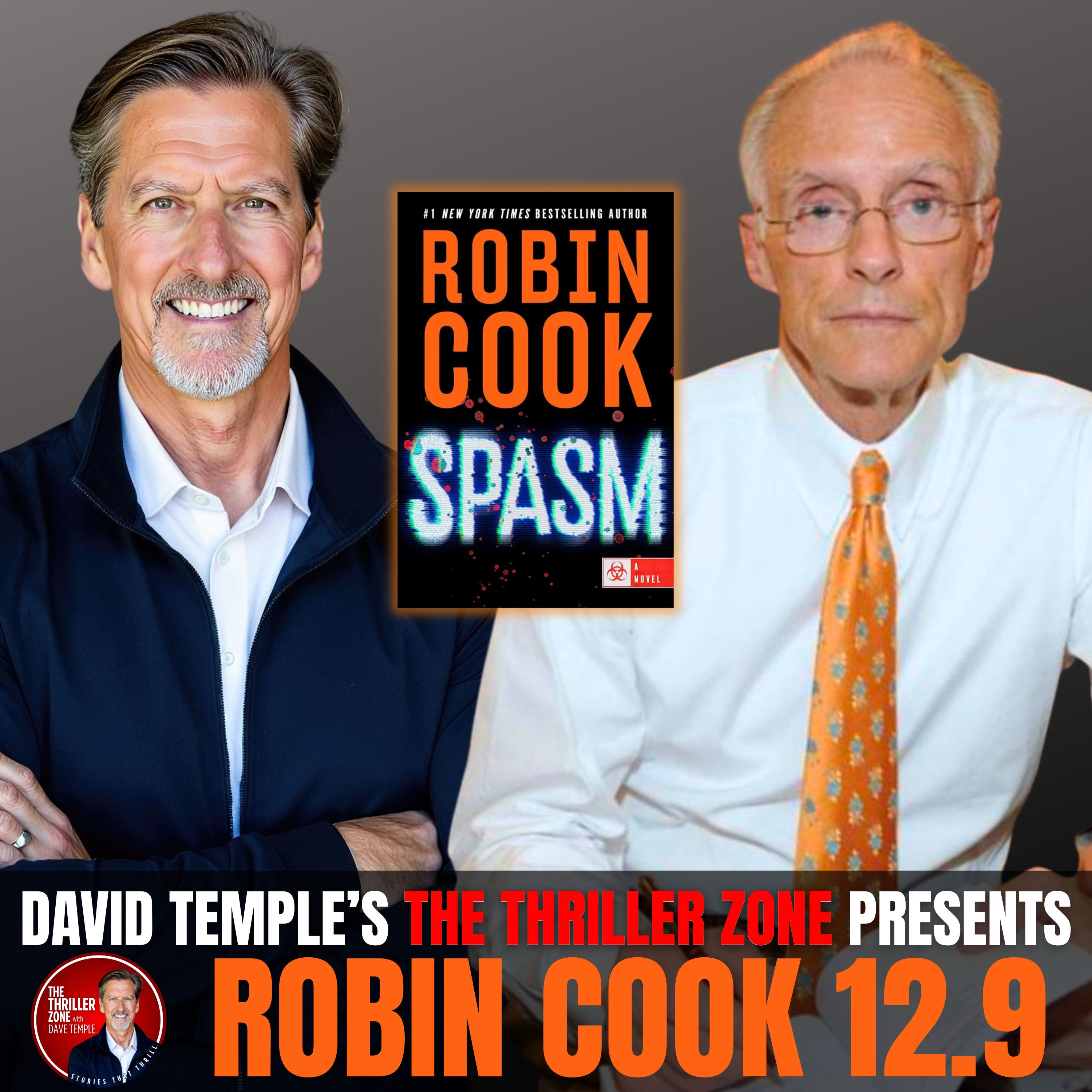


From Coma to Spasm: Robin Cook’s Wild Ride Through Medical Thrillers


On today's 248th episode of The Thriller Zone Podcast, join me, Dave Temple, as I chat (aka geek out) with the legendary Robin Cook, who's been whipping up medical thrillers for decades.
Trust me, this conversation is a treasure trove of insights! We dive right into his latest gem, "Spasm," which has hit store shelves and tackles some seriously intriguing themes around health and medicine.
Robin shares his journey from writing "Coma" while hustling through medical residency to becoming a household name with 42 bestsellers under his belt. We also get a peek into his creative process, as he humorously reveals how he keeps his writing fresh and engaging despite the ever-evolving landscape of the publishing world.
So, grab a snack, kick back, and join us for this lively, laughter-filled exploration of storytelling and the medical mysteries that keep us on the edge of our seats with the legendary master of medical thrillers, Robin Cook.
Be sure to visit: RobinCook.com, TheThrillerZone.com and DavideTemple.com.
Takeaways:
- This episode marks a milestone as we approach 250 episodes of the Thriller Zone podcast, isn't that wild?
- David Temple shares his excitement about interviewing Robin Cook, a legendary thriller author who has shaped the genre since the 70s.
- Cook discusses the integral role of lifestyle in health and how it influenced his writing of medical thrillers over the years.
- The conversation dives deep into how societal fears, like those portrayed in 'Jaws', drive the suspense in Cook's novels, making them relatable and terrifying.
- They also touch upon the challenges of writing during shifts in the publishing industry and how Cook adapts while maintaining his unique voice.
- Finally, the episode wraps with Cook sharing his writing advice, emphasizing the importance of having a dedicated space for creativity that fosters focus and inspiration.
Companies mentioned in this episode:
- Michael Crichton
- RobinCook.com
- New York Times
KEYWORDS - thriller podcast, Robin Cook interview, medical thriller author, New York Times bestseller, writing advice, thriller writing tips, author interviews, health and wellness, writing process, medical fiction, storytelling techniques, character development, suspense novels, book recommendations, thriller genre insights, popular thriller authors, David Temple podcast, podcast episodes about writing, publishing industry trends, creative writing strategies
Mentioned in this episode:
LIFE IN TWO COLUMNS: e/paper/audiobook
Life In Two Columns Ad - Deadpool
00:00 - Untitled
01:26 - Untitled
01:26 - Introduction to the Thriller Zone
08:33 - Health and Aging: The Importance of Muscle Mass
15:29 - Analyzing the Success of Bestsellers
26:34 - The Journey to Success: Hard Work and Connections
31:17 - The Unexpected Path to Writing
44:54 - The Shift in Reading Habits and Publishing
55:04 - The Evolution of Jack Stapleton
01:00:52 - The Importance of Dedicated Writing Spaces
Hello and welcome to the Thriller Zone.
Speaker AI'm your host, David Temple.
Speaker AAnd on today's show, which will be what episode?
Speaker AWe're coming up on 250.
Speaker AYeah, 248 episodes.
Speaker AToday I have the pleasure of sitting down with a genuine legend.
Speaker AYou know, every once in a while you will meet or you will follow a thriller author that you think, what are the chances of my ever being able to sit down and speak with that person?
Speaker AToday is one of those times.
Speaker AAnd we're coming up, what, four and a half years now on this podcast, and there have been a few moments that I went, wow, this is one of those landmark situations.
Speaker AThis guy I followed.
Speaker AAnd you'll hear it in this inside the show.
Speaker AI remember the day the book came out.
Speaker AIt was around the sp.
Speaker AI want to say, the spring of 77.
Speaker AI'm in high school.
Speaker AYeah.
Speaker AI'm coming up on graduating high school.
Speaker AAnd this book came out.
Speaker AAnd about a year later, one of my childhood heroes, Michael Crichton, directed as a film, the author, Robin Cook, the book coma.
Speaker AAnd now, 42 books later, Spasm, another number one New York Times bestselling book.
Speaker AYeah, you're gonna hear David gets a little geeked out.
Speaker ABut you know what?
Speaker AThat's who I am.
Speaker AThat's what happens.
Speaker AGreat interview.
Speaker AWe had such a blast, and I think you're gonna really enjoy it.
Speaker AIt's about an hour and so it's a little bit longer than usual, but it's worth every single solitary minute.
Speaker ASo please, without any further ado, kick back, relax and enjoy as we about wrap up the year.
Speaker AOne of my all time favorites, Robin Cook, right here on the Thriller Zone.
Speaker ATop of the morning to you.
Speaker BGood morning.
Speaker BGood morning.
Speaker BI'm sorry, I just realized I didn't have my phone so I could silence it.
Speaker ANice.
Speaker ALet me do the same thing or I'll get fubarred.
Speaker AYou look fantastic, by the way.
Speaker BWell, thank you.
Speaker AHoly moly.
Speaker AThe reason I, I.
Speaker ASorry, the reason that sounds a little bit odd is I'm like, I'm.
Speaker AI'm flashing back, Rob.
Speaker AAnd by the way, welcome to the Thriller Zone.
Speaker AI'm David Temple.
Speaker BThank you, David.
Speaker AI'm gonna geek out, so just bear with me for about 10 minutes and it'll all settle down and we'll be good.
Speaker ABut I've been reading your stuff since, if not day one, practically day one.
Speaker ASo when I got a chance to talk to you, and I've been working on this for maybe a year, I went, robin Cook.
Speaker AAre you kidding me?
Speaker BIs he still around.
Speaker AOkay, now I see why you say that after what I just said.
Speaker AYou're still alive.
Speaker AGod dang it.
Speaker AThat's amazing.
Speaker BWell, you know, it's interesting, because the other night, I was out to dinner with.
Speaker BWith a very good friend of mine that I used to play tennis with.
Speaker BYou know, we.
Speaker BWe drove each other into the ground, et cetera, and he and I are.
Speaker BAre the same age.
Speaker BAnd I had to say to him, I said, you know, Joe, it's.
Speaker BIt's.
Speaker BI really feel like I'm enjoying being with you.
Speaker BI said, because, you know, I had five roommates in college the last year of college, and I'm the only one left.
Speaker BWow.
Speaker BAnd he said, I had eight members of my study group in law school, and I'm the only one left.
Speaker AWhoa.
Speaker BSo it's.
Speaker BIt's a rather strange sort of set of circumstances.
Speaker AWell, what are you, like, 60 now?
Speaker A50?
Speaker B58.
Speaker A60.
Speaker BYou're teasing me.
Speaker BWell, that's all right.
Speaker BI don't mind.
Speaker AI look at it this way.
Speaker AMy mom used to say, who is now past, rest her soul.
Speaker ABut she used to say, mom, how you doing today?
Speaker AShe goes, well, I'm on this side of the grass, son.
Speaker BGood for her.
Speaker BWell, you know, I have to say.
Speaker AYeah.
Speaker BThat I've actually always practiced what I preached.
Speaker BAnd I realized early in medical school that lifestyle was probably as important as what we were learning.
Speaker BYou know, the idea of being a doctor, taking care of people.
Speaker BBut there wasn't this emphasis on lifestyle in the sense that.
Speaker BThe fact that health is much more strange than ill health.
Speaker BIn fact, the fact that our bodies work as well as they do, when you think about it, it's incredible.
Speaker AYeah.
Speaker BI mean, you.
Speaker BWhen was the last time you worried about your calcium level in your blood.
Speaker AYet?
Speaker ANever.
Speaker BYour body has to do that constantly.
Speaker AYeah.
Speaker BLight variation, you know, that would be.
Speaker BThat could be curtains.
Speaker ASure.
Speaker AWell.
Speaker AAnd not to make it about me, but I just am on the other side of prostate cancer, so.
Speaker AOh, yeah, that went.
Speaker AMatter of fact, I've got a book coming out right now, and it.
Speaker ABasically, the title of it is Life in Two Columns, the Shit that Matters and Everything Else.
Speaker ABecause the moment I got that prognosis, I'm like.
Speaker AWell, as a buddy of mine said, he goes, you know, how you feeling?
Speaker AI'm like, dude, I'm feeling pretty good.
Speaker ABut I'll tell you, when you hear that C word, you.
Speaker AYou put life into two columns, and that's when we both went, oh.
Speaker ABut you.
Speaker AMy point, Robin, is you realize how important that health is and how hard you got to work to keep it there.
Speaker AAnd if you don't, you're, you're messed up.
Speaker BYeah, well, I agree.
Speaker BAnd most people, because, you know, when I, when I was in the last year of college, I was, I was pretty heavy.
Speaker BI was just shy of 200 pounds.
Speaker BIn fact, I was probably the heaviest halfback in our football league.
Speaker BAnd, and I realized, you know, it's probably be a good idea for me to lose some of this muscle mass.
Speaker BAnd.
Speaker BAnd that's I think has stood me in very good stead that I did that well.
Speaker AAnd to your point about muscle mass, what I'm learning about, and I don't want to make this a whole all about health, but you are a doctor, for crying out loud.
Speaker AAnd I did play one in a miniseries back in the.
Speaker ABut.
Speaker AThe muscle mass, the working out into keeping the muscle strong and alive is really everything I've read about it.
Speaker AFor longevity is the magic pill because you let that atrophy and, and you're, you're in a world of hurt.
Speaker BYeah.
Speaker BAnd it, and unfortunately it does get to a point however, where you start losing muscle mass no matter what you do.
Speaker AOh.
Speaker BAnd I've noticed that.
Speaker BAnd I've realized in a way that medicine.
Speaker BHas not had as much attention paying to aging as it really should have.
Speaker BWhen I started talking to fellow physicians in the mass general.
Speaker BAbout perhaps muscle mass or considering the loss of muscle mass, maybe this is something we should, we should really think about more because.
Speaker BBut they had a knee jerk reaction to the idea of either taking particularly growth hormone or, or, or testosterone, which are the things that really keep your muscle mass.
Speaker BAnd yet both of those drop as you get to a certain age.
Speaker AYeah.
Speaker ALet me.
Speaker AThis is funny because a few years back I went to a doctor and said, you know, I need some more testosterone.
Speaker AMy numbers in the gym are dropping.
Speaker ACan you help a brother out?
Speaker AAnd she goes, yeah, yeah, we can do that.
Speaker ALet's run a few, you know, just a blood test.
Speaker ANow listen to this, because this was, this was, this was five years ago.
Speaker ASo she ran a quick test.
Speaker AMy PSNA PSA numbers were through the roof.
Speaker AShe goes, david, your numbers.
Speaker AThis should have been this kind of a climb in about 20 years.
Speaker AYou did it in two.
Speaker AIf we had given you testosterone, it would have killed you probably.
Speaker BYeah.
Speaker ASo here we are.
Speaker BNo, that's true, that's true.
Speaker BYeah.
Speaker AWell, well, I see your guns are loaded.
Speaker AYou showed up with the loaded guns.
Speaker ASo I mean, you're ready to Play.
Speaker BWell, actually, I'm about to hit the bike out on my bike.
Speaker AIs it a trek by any chance or is that just the jersey?
Speaker BNo, it is a track.
Speaker BI forgot that I was an advertisement here.
Speaker BIt is a trek.
Speaker AYeah.
Speaker AYeah.
Speaker AWell, I want to start here and I'll be very respective of your time because thank you for showing up on early.
Speaker AI mean, Jesus, that is amazing.
Speaker ABut I'm recalling, Robin, it's high school graduation, 1977.
Speaker AI'm probably two years into really going, you know, I, I love reading and I, I think I might be able to write.
Speaker AI don't know, I mean.
Speaker AAnd then I picked up your book.
Speaker AThis is 77.
Speaker AI want to say, I want to say Spring.
Speaker AAnd I'm like, holy.
Speaker AThis is, this is the kind of book I like reading at.
Speaker AThat was enough almost.
Speaker AAnd this is, this was, I mean this was medical thriller.
Speaker AWhat is that?
Speaker ARight.
Speaker ASo I'm reading this and I'm just completely in love with it because your style was so amazing and within.
Speaker AThere's two things folks I want to.
Speaker AMy listeners are big, prominent, prominently writers and so forth.
Speaker AThriller writers.
Speaker ASo I want you to hear this.
Speaker ARobin is writing this book during nights while you're what, an ophthalmology resident?
Speaker AYeah.
Speaker AScribbling away.
Speaker BYeah.
Speaker AI hope I can make something out of this.
Speaker AGeez, can I?
Speaker ACan I?
Speaker AYou get picked up within a year.
Speaker AThat doesn't even happen anymore hardly does it, Robin?
Speaker AI mean, you've been in it for a few decades.
Speaker BWell, you know, there was quite a, an interval between my first book, which was a commercial failure.
Speaker BAnd my second book, which you're talking about.
Speaker BAnd, and in fact, I almost didn't really write another book.
Speaker BI thought, well, I don't know.
Speaker BAnd you know, I thought people would really be interested in this issue about sort of the dark side of medicine, but they weren't.
Speaker BAnd, and if I wasn't, hadn't been teased as much as I had been by the Harvard ophthalm faculty because my book came out as I started my residency and.
Speaker BBut you know, I had already done a surgical residency, so I, I was kind of not the same as my fellow EYE residents.
Speaker BI had already done a whole residency and then had been in the military, so I was.
Speaker AWell, you're, you were a big deal is what you're trying to say.
Speaker BWell, not really.
Speaker BYou know, when, when you start out as a, as a first year resident, no matter what the program.
Speaker AYeah.
Speaker BYou're kind of.
Speaker BThis is.
Speaker BYou're in Hayesville.
Speaker AYeah.
Speaker BAnd so.
Speaker BAnd I got a bit teased about the fact that I wrote this book and crying a little bit about surgical residency and how they.
Speaker BYou're.
Speaker BYou're being intimidated.
Speaker BAnd.
Speaker BWhich I don't think is really healthy.
Speaker BAnd so.
Speaker BBut that stimulated me to write another book.
Speaker BAnd I said, you know, I'm going to write another book, and this one I'm going to call the Retina Rip off.
Speaker BBecause, you know, my.
Speaker BWhat started me writing was the idea that medicine and business were in.
Speaker BWere.
Speaker BWere married and becoming closer and closer together and.
Speaker BWhich I thought was a big mistake.
Speaker BAnd.
Speaker BAnd it's continued to this day.
Speaker AYeah.
Speaker BAnd so that's really been my recurrent theme.
Speaker BBut I thought, there's no reason to write a book if nobody's going to read it.
Speaker BAnd.
Speaker BAnd so then what I did was.
Speaker BWell, I actually talked.
Speaker BAre you interested in this or.
Speaker ARobin, this is why I'm here.
Speaker AAre you kidding me?
Speaker AI'm, like, just trying to stay.
Speaker AYes, go, please.
Speaker BYou know, I. I played basketball.
Speaker BI played basketball for a long time, and I would play very much, like three, four times a week.
Speaker BAnd when I was an eye resident.
Speaker BThe medical side of Harvard, we played the business school and the law school.
Speaker BAnd in the business school, I kind of cornered a couple of these young professors, et cetera, that.
Speaker BWho were playing.
Speaker BAnd I said, you know, do you guys have any suggestions for me?
Speaker BYou know, I. I wrote this book.
Speaker BNobody bought it.
Speaker BAnd they said, yes, we teach by the case method.
Speaker BSo they said, you know, take a couple of cases that you think were successful and study them and see if there's anything that you can get out of that to take advantage of or try to emulate.
Speaker BAnd that's exactly what I did.
Speaker BAnd so that period of time between my first book and coma, I spent kind of researching bestsellerdom.
Speaker ANow, let me interrupt.
Speaker AIs this when you were doing the index card maneuver, where you're studying bestsellers and you're kind of reverse engineering thrillers?
Speaker AIs this that same.
Speaker BYes.
Speaker BAnd in particular.
Speaker BI chose two books to really study.
Speaker BAnd I chose Love Story by Eric Siegel.
Speaker AYeah.
Speaker BAnd Jaws by Peter Benchley.
Speaker AGeez.
Speaker AWell, you picked two monster hits there.
Speaker BExactly.
Speaker BAnd when I compared it to my book, Year of the Intern.
Speaker BAnd I tried to say, you know, what makes these.
Speaker BWhy did these books succeed and mine didn't?
Speaker BAnd I realized that there was.
Speaker BYou could really look into this, and you could read these books with this kind of idea in mind to try to think of or.
Speaker BOr to see where my book fell off and.
Speaker BAnd These books succeeded.
Speaker BAnd, and, and to try to see how these books, how these projects were put together.
Speaker BYou know, when you read about, like Peter Benchley's book.
Speaker BWas, you know, the way it was written, et cetera, the, how he was encouraged and how he put it aside and, and you think, how did it come out to be such a success?
Speaker BWell, it took advantage of a universal fear.
Speaker ABoom.
Speaker BThat we all have.
Speaker BYeah, we all have.
Speaker BAnd so when you read the book, you were already drawn in because it was something you were afraid of.
Speaker BI mean, the idea, how can you go in the ocean and not think about a shark?
Speaker AAnd, and, and just to put a finer point on that, to this day.
Speaker AAnd how long has this been?
Speaker ATo this day?
Speaker AI, I am semi terrified of the water because of that.
Speaker AEver since then.
Speaker AIt's ridiculous.
Speaker AI know it's ridiculous.
Speaker AAnd I live in San Diego.
Speaker AI am 1.2 miles from the beach where surfers are in there every single cotton picking day.
Speaker AAnd they'll.
Speaker AYou'll see a tail or dorsal vent every once in a while and they're like, yeah, just a shark.
Speaker AIt's not going to bother me.
Speaker AWhat, don't you remember?
Speaker BYeah, yeah, exactly.
Speaker BWell, and, and then if you look at the other one.
Speaker BLove story.
Speaker AYeah.
Speaker BWe also share certain emotions, and that one really grabbed some emotions that we all sense or all feel.
Speaker BSo here was this combination of a universal fear and universal emotions that these writers, whether they're psychologists or not, they weren't.
Speaker BBut anyway, they had this idea and to put these together.
Speaker BSo actually coma had both universal fear.
Speaker BThere's no one that doesn't go in a hospital, particularly having anesthesia, who thinks, am I going to be walking out of here?
Speaker BThat's the same thing of going in swimming.
Speaker ASure, sure.
Speaker BYes, you are.
Speaker BBut at the same time, when you go in swimming, you're going to also be able to walk out because you're not going to get eaten by a shark.
Speaker BAnd most likely in medicine, yeah.
Speaker BI mean, anesthesia departments, particularly in good hospitals, are really, really well run.
Speaker BAnd.
Speaker BYou'Re not going to have any problem, but you always worry about it.
Speaker BSo here I was, taking advantage of the fact that everybody has the same fear.
Speaker ABut here, here's what I want to know, Robin.
Speaker AWhere was that?
Speaker ADo you remember the moment?
Speaker AAnd I know it's been a few years.
Speaker ADo you remember that moment when you're studying Love Story, you're studying Jaws, you're coming off of this, what felt like a failure, and you go, do you remember that moment where you went, oh, oh, wait, I've got it.
Speaker BYou know, I wasn't that optimistic, but I. I thought it was enough to make the effort.
Speaker BAnd luckily, I was no longer a surgical resident.
Speaker BI was a ophthalmology resident.
Speaker ARight.
Speaker BAnd to me, being an ophthalmology resident in comparison to being a surgical resident was being on vacation.
Speaker AYeah.
Speaker BSo every night I was back in my little teeny tiny apartment.
Speaker BAnd that's when I, I was, I. I wrote coma at night.
Speaker ASo I want to.
Speaker AI want to make sure I punch up this one idea.
Speaker ASo first of all, you write the story.
Speaker ANumber two, you write it, you get it picked up within.
Speaker AWithin a year.
Speaker AAnd then within another year, 78, I'm now graduating, and the movie comes out.
Speaker AMichael Crichton, childhood hero comes along, goes, oh, I think I'll direct that thing, and it becomes a monster stratospheric smash.
Speaker ATalk to me about that.
Speaker AI mean, first of all, I know you're still like going, oh, geez, I made it with the.
Speaker ASelling the book.
Speaker ABut then you have Michael Crichton, and I realize Michael Crichton in 78 wasn't what he was in 88, etc, but he was.
Speaker AYou guys both shared that medical expertise mindset.
Speaker AAnd, and he was a killer director.
Speaker AI mean, what was that like?
Speaker BWell, you know, there was a little.
Speaker BThere's a different.
Speaker BWe actually, we were friends.
Speaker BYes.
Speaker BAnd.
Speaker BAnd in fact, I was.
Speaker BDo you know I was in the Navy and I was in San Diego.
Speaker ANo, talk to me.
Speaker BYeah, I was.
Speaker BI.
Speaker BYou probably don't remember it, but the Navy used to have this program called Sea Lab, and it was with aquanauts.
Speaker AYes.
Speaker BYou know, living under the sea and all that sort of stuff.
Speaker BAnd I, I was one of the aquanauts.
Speaker BI got drafted after my surgical residency and I was actually a relatively high ranking officer because I got credit for all my education.
Speaker BOne day I was normal, and the next day I was a Lieutenant commander.
Speaker BAnd so anyway, I was there and I, I had known a little bit about Michael Crichton.
Speaker BAnd because I knew he had gone to medical school like I had, I knew he had not done an.
Speaker BAn internship or residency.
Speaker BSo anyway, I called him up and I said, you know.
Speaker BI'm down here and we're doing diving research.
Speaker BAnd he was fascinated.
Speaker BAnd so he came down, I had him come down and I showed him all our dive systems that we were doing because we were doing thousand foot dives.
Speaker BAnd then he wrote the book Sphere.
Speaker AYeah.
Speaker BAnd that was because of coming down to visit Me and learning about, you know, he was.
Speaker BHe was kind of a sponge like guy.
Speaker AYeah.
Speaker BVery intelligent.
Speaker AYeah.
Speaker BAnd absorbed things immediately.
Speaker BAnd could see some of the.
Speaker BImmediately saw that aspect of it and whatnot.
Speaker BAnd so when I wrote.
Speaker BAfter I wrote Comma, I actually held out for him to be the director.
Speaker BOh, what can you do?
Speaker BThey actually wanted Brian De Palma to be the director.
Speaker BAnd I said, no, I want Michael Crichton.
Speaker BAnd because I was just afraid a director would turn Coma into some sort of horror picture rather than try to be exact about the medical.
Speaker BThat's hard enough.
Speaker AYeah.
Speaker AI was gonna say.
Speaker AAnd Brian De Palma would have probably inched it over into that lane.
Speaker BThat's what I was afraid of.
Speaker AYeah.
Speaker BAnd so with Michael Crichton, I at least knew that he would be true to the medical aspects of it.
Speaker AWow.
Speaker BAlthough we ended up having some arguments about it because.
Speaker BYeah.
Speaker BHe felt that it would be better to.
Speaker BReveal the secret, what was going on and then.
Speaker BAnd then have it be mostly the second half kind of be a chase.
Speaker BMy sense is that I thought it would be better to keep the secret going a little bit longer because it was kind of fabulous the way.
Speaker BInvestigating it and stuff.
Speaker BBut that was a minor disagreement.
Speaker BAnd.
Speaker BAnd.
Speaker BSo it was a.
Speaker BIt was a very positive experience for me.
Speaker BAnd.
Speaker BAnd so, yeah, it.
Speaker BIt.
Speaker BYou know, it.
Speaker BIt's amazing that the power of.
Speaker BI mean, playing basketball with the business school guys ended up having this kind of result.
Speaker BAnd so that's why my.
Speaker BOne of my characters, Jack, plays basketball.
Speaker AOh, of course.
Speaker AWell, you know, you.
Speaker AYou.
Speaker AI want to say you feel.
Speaker AIt feels like you have lived a truly charmed life.
Speaker AI mean, to have that kind of success, that kind of education, those kind of connections, it.
Speaker AYou know.
Speaker AYou're a lucky guy, dude.
Speaker BOh, there's no doubt, David.
Speaker BThere's no doubt.
Speaker BLuck has played an enormous role.
Speaker BBut also, I have.
Speaker BI have to say that I've been an extremely hard worker.
Speaker AYeah.
Speaker AAnd I did not.
Speaker AAnd I don't want to take anything away from that.
Speaker AI mean, I. I'm not.
Speaker BWell, yeah.
Speaker BYeah.
Speaker BI mean, you know, for instance, when I got to college, I realized I was on my own.
Speaker BI had never had any discussions with my father or anything because I don't know what.
Speaker BYou know, I still to this day don't understand why we didn't really have any relationship.
Speaker BAnd so I. I had to put myself through both college and medical school.
Speaker AWow.
Speaker BAnd.
Speaker BBut, you know, that actually turned out to be a big plus.
Speaker BBecause everything that's happened wouldn't have happened had I not had to do that.
Speaker BFor instance, in medical school, I had to work at night.
Speaker BAnd I ended up with a job working for the hospital at night, running blood gas.
Speaker BDeterminations for the open heart surgery department.
Speaker BWow.
Speaker BAnd I did that every night, every weekend for four years.
Speaker BBut it got me through medical school with no debt.
Speaker BBut more importantly, the person who ran the lab in the daytime, the professor, was a French emigre and he knew Jacques Cousteau.
Speaker BAnd it turned out that when Jacques Cousteau, at that time, when I was a medical student, was preparing to do his conshelf experiments, where he was putting divers down to live under the sea at one atmosphere, and he had no way of knowing what the blood gases were.
Speaker BIf you want to be scientific about it, sure.
Speaker BSo I was asked if I would set up a lab for Jacques Cousteau, the same lab that I ran at night.
Speaker BSo I. I was the one that got all the equipment.
Speaker BAnd then here I was, a destitute medical student, and I spent two months every summer with the Cousteau group.
Speaker BNow, that was repayment enough, obviously.
Speaker BHowever, during one of the summers, a United States Naval, very high ranking naval officer came to investigate this, what Cousteau was doing.
Speaker BAnd I helped translate for him with the divers that he wanted to talk to.
Speaker BAnd then when he left, he said, young man, if you ever find yourself in the Navy, give me a call.
Speaker BWell, I thought, I'm not going to the Navy.
Speaker BWell, what happened is when I finished my surgical residency, I was immediately drafted by the Navy, assigned to the Marines.
Speaker BAnd I was immediately assigned to go to Da Nang in the mid-60s to run a surgical ward.
Speaker BAnd I called up this naval officer.
Speaker AWow.
Speaker BAnd he made it possible for me to become part of his organization, even though it was supposed to be reserved for career Navy.
Speaker BI wasn't career Navy.
Speaker BI was drafted.
Speaker AYeah.
Speaker BBut to do that, I had to go to submarine school.
Speaker BNow, a lot of people would say, oh, my goodness, he went to submarine school, you know, and to take six months out to study, you know, how these nuclear submarines work.
Speaker AYeah.
Speaker BAnd I had to learn everything.
Speaker BAnd then I thought, all right.
Speaker BThen he said, fine, you're done.
Speaker BNow go to diving school.
Speaker BWhich I did hard hat diving.
Speaker BI was in the last class.
Speaker BAnd then I said, you know, I got so interested in submarines, I really want to go out on a real operational patrol.
Speaker BAnd he thought I was crazy, but arranged it.
Speaker BAnd so I was out on a nuclear submarine.
Speaker BAnd why I'm telling you this is because it was being on the nuclear submarine.
Speaker BWe went underwater.
Speaker BWe never even came to the surface for 75 days.
Speaker BThat's, that's where I wrote my first book.
Speaker AWhoa.
Speaker BOn a submarine, underwater.
Speaker AWow.
Speaker BIn the Philippine Sea.
Speaker BAnd had I not been on that submarine, I probably never would have written a book.
Speaker BI mean, I had thought about it.
Speaker AYeah.
Speaker ALook at.
Speaker BWhen do you have the time?
Speaker ANo.
Speaker AAnd, and I wanted to ask.
Speaker AOne of the questions I wanted to ask is, did.
Speaker AWere you one of those kids that grew up, oh, I want to be a writer.
Speaker BDid you know?
Speaker AYeah.
Speaker ASo this is what's amazing to me.
Speaker AAlmost every single.
Speaker AI bet you 95 to 97% of the authors who get on this show, and it.
Speaker AWe're coming up on five years now, you're going to be number 250 episode, I think.
Speaker AAnd they all went, oh, I've, I've always dreamed of being a writer since I was a kid.
Speaker AMy first story was at 4 years old.
Speaker AAnd I'm like, really?
Speaker AThat's amazing.
Speaker ASo that's cool to know that you're like, oh, no, I got, I got 10 other careers ahead of you there, Dave.
Speaker BWell, you know what?
Speaker BWhen I was in college.
Speaker BI, I, I wanted to go to medical school to get into medical, and I wanted to be able to choose the medical school.
Speaker BI didn't, you know, I really.
Speaker BSo I realized I had to get very good grades, which I had done in high school, et cetera.
Speaker BSo I knew I could do it.
Speaker BAnd.
Speaker BBut my first, I had to take humanities course the first year, and my first paper in college that I wrote, which I thought it was pretty good, I handed it in, I got a C minus.
Speaker BAnd I could see my aspirations for medical school flying out the window.
Speaker AOops.
Speaker BFrom then on, I said I have to stay away from these difficult courses like humanities, English, history, writing, anything that's graded subjectively.
Speaker BI had to stay away from, oh, intuitive.
Speaker BI became.
Speaker BI was a chemistry, math, physics major, black and white.
Speaker BAnd you either knew the material or you didn't.
Speaker AYeah.
Speaker AOh, that is brilliant insight.
Speaker AI never thought about it that way.
Speaker BSo.
Speaker BThe last thing I thought, you know, to be a writer, I should have taken or courses and learned stuff about writing or whatever.
Speaker BAnd I, I didn't have that.
Speaker BBut, you know, I got to medical school and I realized that business was, was really taking over medicine.
Speaker BAnd this is in the, you know, the late 50s, early.
Speaker BAnd I thought, you know, someday I'm going to write a book about medicine as it really is, not as the way people Wish it was.
Speaker BAnd of course, then I never had a chance to write a book because I was so busy in medical school.
Speaker BAnd then you're a surgical resident.
Speaker BYou don't have any time.
Speaker BAnd it wasn't until I got drafted in the Navy that I suddenly had time, and that's when I wrote my first book.
Speaker AAll right, so one thing I didn't do out of the gate, which is to flash your book Spasm, which is gorgeous, by the way.
Speaker ABut so to your point, I want to do this real quick.
Speaker ASo look inside here.
Speaker AIt's two columns.
Speaker AIt said there's an arrow that says, please turn the page because he's written.
Speaker ANo, I didn't really say that.
Speaker AI mean, here's a guy who has not, by the way, folks, no formal writing training, but lots of bestsellers, Muy importante.
Speaker ANumber one numero uno, New York Times bestseller.
Speaker AI mean, come on.
Speaker AGood for you.
Speaker ALet's do this.
Speaker BAnd yet, at this time, I actually feel lucky.
Speaker BI really do feel lucky that I have this, because.
Speaker BAt this point, in contrast to my fellow medical students, I still am intimately involved in medicine, but without having to deal with insurance, med health insurance companies, or malpractice insurance.
Speaker BBecause each year I come out with a book that's about something that's related to medicine that I've had to research.
Speaker AYeah.
Speaker BTo.
Speaker BTo.
Speaker BAnd know enough about it.
Speaker BThe book you just held up, Spasm, deals with something that people don't realize they don't know anything about, nor do they really care about necessarily, but it's something that they ought to know about, and that's prions.
Speaker AThey're going to worry about it after they're.
Speaker AWhen they finish the book, I'll tell you that.
Speaker BRight.
Speaker BAnd.
Speaker BAnd where.
Speaker BWhere did this title come from?
Speaker AYeah, where did that come from?
Speaker BIt's.
Speaker BIt's one of the main symptoms of novichok poisoning.
Speaker BNovichok poisoning?
Speaker BIt's a.
Speaker BIt's a nerve agent that developed by the Russians, and they use it to kill their adversaries, usually defectors or.
Speaker BAnd they even used it on poor Navoni, who is.
Speaker BHe was.
Speaker BHe was poisoned with novichok, and he had spasms and pain, et cetera.
Speaker BAnd.
Speaker BAnd obviously that means that Novichok is involved in this story.
Speaker BI wonder how that is.
Speaker AHow did that happen?
Speaker BHow did that happen?
Speaker AWell, let's.
Speaker ALet's do this because, I mean, we think about.
Speaker AYou've covered organ harvesting, pandemics, medical tourism, always ahead of the curve.
Speaker ASo what keeps you up at night?
Speaker AThat's part of the first question.
Speaker AAnd with spasm tackling bioweapons, neurological attacks like you just referenced, what's the medical nightmare that you're researching now that is also quite scary and yet to publish?
Speaker ASo it's two things.
Speaker AWhat, what's keep what keeps you up at night on your own mind and what are, what's the medical night.
Speaker AWhat's the next medical nightmare that you're going to scare the out of us with?
Speaker BWell, do you mean that in general or, or in specifics?
Speaker AI'll take whatever you give me.
Speaker BWell, I've already mentioned in general, it's this problem of, of business.
Speaker AYeah.
Speaker BAnd medicine in bed together.
Speaker BAnd it's having all the terrible results that, that I kind of envisioned.
Speaker BAs you've mentioned, a lot of my books, I, I have been able to anticipate things happening.
Speaker BSome more astonishing than others.
Speaker BLike my book Fever, I wrote in very early 80s and it, and it's, and it definitely said that the future of cancer treatment is not going to be small molecule pharmaceutical agents, but it's going to be the immune system.
Speaker BI'm sorry about that.
Speaker BThat's something that.
Speaker BWith a condominium.
Speaker BI think they're checking the fire department.
Speaker BI mean the fire.
Speaker AChuck, Chuck.
Speaker AWe have a spasm on level seven.
Speaker BSo.
Speaker BWhat was I saying?
Speaker AWell, yeah, listen.
Speaker AWell, here you go.
Speaker AWhen you think about it, viral pandemic cell nano cure, critical crisis, seizure, shock, toxin invasion, fatal cure, terminal vital signs, mortal fear, outbreak, fever.
Speaker BI mean they're all about very specific medical issues and problems that, that either everyone was aware of, but most of them are ones that people are not aware of.
Speaker BAnd.
Speaker BLike with spasm, people are aware of prions in a certain sense because they remember the mad cow disease episode.
Speaker BAnd a lot of people, I mean that's almost as scary as sharks.
Speaker BTo eat a hamburger and realize it's going to kind of turn your brain into mush.
Speaker AYeah.
Speaker BAnd, and the issue about bioweapons is also something that's very specific.
Speaker BIt's something I've dealt with before.
Speaker BI wrote a book called Vector.
Speaker AYep.
Speaker BAnd that book anticipated the use of anthrax powder as a bioweapon and it was going to be spread in the mail.
Speaker BAnd that exactly happened.
Speaker AYeah.
Speaker BAnd in fact, the day that it happened, I happened to be watching the, the news.
Speaker BI don't know whether it was ABC or NBC or whatever.
Speaker BAnd the, the, they interviewed an FBI agent who was in his office.
Speaker BHe had his arms crossed like that, leaning on his desk and on his desk, just to the side of him was a copy of my book Vector.
Speaker BAnd so, and researching that book, I had an opportunity to meet and talk to the highest ranking Russian defector who ran one of the big bioweapons plants in Russia called Vector, which is why I titled that book Vector.
Speaker BAnd he told me that even though they were signatures of the bioweapons treaty, he said his organization had produced 100 tons of, of anthrax powder.
Speaker BThat's enough to kill everybody in the, in the world.
Speaker AYeah.
Speaker BAnd this was back when Vector came out.
Speaker BI wrote Vector.
Speaker BWhat?
Speaker BI don't know, 20 years, 25 years ago.
Speaker AOh my God.
Speaker ASo back to that question about what keeps you up at night.
Speaker AWhat.
Speaker AWhat is happening when you turn on the TV in the morning and have your cup of coffee?
Speaker AIf that is indeed the case, what do you see and.
Speaker AOr think about that perhaps you have not written about yet, but you're going holy bananas.
Speaker AWhat if this were to happen?
Speaker BWell, let me give you very specifics.
Speaker AThank you.
Speaker BI'm working on my next book already.
Speaker BWhich is going to be called Bleed.
Speaker AKind of surprised that hasn't happened yet.
Speaker AGood for you.
Speaker BWell, actually, I wanted it to be called hemorrhage.
Speaker AOkay.
Speaker BBut the word is too long.
Speaker AYeah.
Speaker BAnd it, and if you, if you imagine, you know, looking at a, at a, at a book.
Speaker AHuh.
Speaker BInstead of it being able, it would have to wrap around.
Speaker ARight.
Speaker AH e. I don't even know.
Speaker BOtherwise it'd be so small.
Speaker AYeah.
Speaker AYeah.
Speaker ASo blood does it, doesn't it?
Speaker BThat's why we changed it to.
Speaker BI changed it to Bleed.
Speaker BBut it's not about actual, literally blood loss.
Speaker AIt's.
Speaker BIt's the fact that, that, that those terms are used in economics as well.
Speaker BAnd the trouble is that some hospitals are hemorrhaging capital.
Speaker BWhy.
Speaker BAnd they, and a lot of these smaller hospitals are closing.
Speaker BWhy is that?
Speaker BWhy are they suddenly going bankrupt?
Speaker BBecause they were taken over by private equity and private equity has drained all the equity they had, whether it be in terms of.
Speaker BUsually it's in terms of real estate.
Speaker BAnd leaving.
Speaker BThey buy these, these hospitals are a little bit in trouble, but by taking advantage of legal maneuvers, they actually, they buy using leverage, buyout and transfer the debt to the hospital.
Speaker ABig business.
Speaker AYeah.
Speaker BThat's going to be the next book.
Speaker ANow can you give me a little inside scoop?
Speaker AI promise I won't tell anyone.
Speaker AWhen is that expected to come out?
Speaker BWell, this book is going to be released.
Speaker BSpasm is going to be released December 9th.
Speaker BI imagine it'll probably be about the same.
Speaker BBut a year from now.
Speaker ACan we Talk for just 60 seconds about business and in.
Speaker AAnything you don't want to drill down on, I'm good with.
Speaker ABut do you.
Speaker AYou have to have seen a seismic shift in, in the business of writing, publishing, the publishing houses, etc.
Speaker ABetween when you started with year of the intern coma and now.
Speaker AHow.
Speaker AHow is it.
Speaker AWhat's like.
Speaker AWhat's the big.
Speaker AWhat's kind of the umbrella thing that has shifted the most, the way you see it.
Speaker BThat men don't read anymore?
Speaker AIsn't that the truth?
Speaker BUm, which I think is.
Speaker BIs.
Speaker BIt's.
Speaker BYeah, it's.
Speaker AIt's sad, really.
Speaker BIt's sad and it's problematic.
Speaker AYeah.
Speaker BAnd.
Speaker BThey'Ve convinced themselves that they don't have time to read.
Speaker AYeah.
Speaker BUm, it doesn't.
Speaker BI mean, they're reading on their phones, et cetera, and their computers, but they're not reading books anymore.
Speaker BAnd, and it's.
Speaker BAnd it's.
Speaker BIt's.
Speaker BI believe they.
Speaker BThey're not.
Speaker BThey're putting off a great enjoyment and also the fact of participating and, and being able to participate more in.
Speaker BIn what's going on in our culture.
Speaker AYeah.
Speaker BAnd so I see that as the biggest change and.
Speaker BWhich is part of the reason that we thriller writers are suffering to a degree, because I think earlier most of our readers were men.
Speaker AYeah.
Speaker AYeah.
Speaker BMen like thrillers.
Speaker BAnd that's why I. I started writing thrillers was because I. I felt like I had a lot to say.
Speaker BBut let's put it in a.
Speaker BIn a format that people will have fun with and get them to read about a subject matter that they might not.
Speaker BIf it was a nonfiction book entitled, you know, Organs for Transplantation or something, they probably wouldn't read, but.
Speaker ARight.
Speaker BBut they read Coma.
Speaker ARight.
Speaker AWell, do you think.
Speaker ADo you think audiobooks will.
Speaker AThe meteoric rise of audiobooks helps offset some of that because people are willing to at least take the time to listen, whether they're walking or working in the yard or taking a long drive.
Speaker AThey're absorbing it that way.
Speaker BYes.
Speaker BThat's filled it into some degree.
Speaker BI. I wish it was more.
Speaker BAnd you see, just by looking at the bestseller lists now, is that the.
Speaker BA lot of the.
Speaker BMost of the bestsellers are kind of psychological romance kind of books that appeal to women.
Speaker AWell, I was just getting ready to say.
Speaker AYou took the words right out of my mouth.
Speaker AI was going to say, Robin, if you want to get more audience, perhaps since the highest, biggest, fastest growing, most obsessive Widest I could keep going with superlatives, but I'll just stop is probably romance.
Speaker ADark romance, hot romance, sweet romance, romanticy fanta.
Speaker AI mean maybe you should, maybe you could look into a little romance.
Speaker ARobin Cook, the romance writer.
Speaker AChicka chicka bomb bomb, right.
Speaker BWell, you know, I did a little tiny bit with some of my early books about Laurie Montgomery and Jack Stapleton because I teased people with, with their relationship for a number of books until they actually got married.
Speaker BUh huh.
Speaker BAnd now they're married.
Speaker BAnd so there's, now I deal with that a little bit.
Speaker BBut you're right, I mean I, perhaps I can kind of try, try to deal with that a little bit more.
Speaker BBut you know, it's, it's.
Speaker BI guess I don't feel as, as capable in that regard.
Speaker ARobin, come on.
Speaker AFirst of all, this is what, number 15 since 1991.
Speaker ASo Jack and Lori are still sticking around.
Speaker ATwo, you're a sensitive, intelligent, highly intellectual man with a broad.
Speaker AThirst and hunger for life.
Speaker ASo I think you could turn that dial just a little bit and turn the chicka chicka boom boom up a little bit.
Speaker BWow.
Speaker BI had, I've had a couple of interesting conversations with Freda McFadden.
Speaker BOh yeah, has dominated the bestseller list.
Speaker BShe had been interviewed and gave an interview to the New York Times and in it she said that her mother, my favorite author of her mother, who really encouraged her to read at a young age, was Robin Cook.
Speaker BSo we ended up, I ended up chatting with her and because she's a, she's a physician also.
Speaker AA, I knew that.
Speaker AB, I, I wanted to ask you that because on the back of all these accolades stands her as number one.
Speaker ARobin Cook is at the top of his game.
Speaker AAnd you know you have a lot of, you have a plethora of great reviews here, but I was like, I wonder why he, what, Frida must be a fan or something so that, well.
Speaker BShe, she says she still is, but that was actually her mother's quote.
Speaker BI had her mother read a very early version of Spasm.
Speaker AIt doesn't say mother.
Speaker BIt doesn't say mother.
Speaker BIt says.
Speaker AWell she's, she is on fire.
Speaker AI mean I have never seen, outside of maybe Colleen Hoover, I've never seen anybody blow up to the degree of, of Frida.
Speaker AIt's, it's astonishing.
Speaker BYeah.
Speaker ASo again, now granted, hers is not romance, but it is, I don't want to say Chick.
Speaker ALook, that's not going to sound exactly right, but I, I think you should think about that.
Speaker ARobin.
Speaker AI'm Just saying, I'm, you know.
Speaker BRight.
Speaker AAll right.
Speaker AYou know, we have touched on so many things.
Speaker ASpasm, of course.
Speaker AJackie and Laurie, we just mentioned 15th Jack Stapleton novel since 91.
Speaker AYou've been around.
Speaker AYou've been through 9, 11.
Speaker AYou've been through the pandemics, the digital revolution.
Speaker AHow.
Speaker AHow in the world.
Speaker AAnd this is going to sound like.
Speaker AI don't want this to sound like.
Speaker AWhere do you get your ideas from, Rob?
Speaker AAnd I don't want to.
Speaker AI don't want to sound like that.
Speaker BWell, I can answer that.
Speaker BI can answer that question.
Speaker BBut.
Speaker ABut I wasn't going to ask him.
Speaker AWhat I want to say is, how.
Speaker BDo you keep the.
Speaker AThe genre so fresh all these years?
Speaker ASo I.
Speaker AOkay, go ahead and tell me how you come up with the ideas and how do you keep it fresh?
Speaker BWell, I. I have said multiple times that I'm probably the only person in the United States who benefits from the fact that we have the worst health care system in the industrialized world.
Speaker AIsn't that the truth?
Speaker BIt's.
Speaker BIt's sad.
Speaker BIt really is.
Speaker BIt.
Speaker BWe're the only major industrialized country, for instance, that allows pharmaceutical companies to advertise prescription drugs.
Speaker AYeah.
Speaker BI mean, just think about that.
Speaker BHow is it.
Speaker AYeah.
Speaker BAnd.
Speaker BAnd how is it that we spend on just about all prescription drugs, about four times what everybody else in the world pays?
Speaker BHow has this maintained itself?
Speaker AExactly.
Speaker AYeah.
Speaker BSo even though I've written multiple books about the pharmaceutical companies and.
Speaker BAnd how they're kind of robbing us blind.
Speaker AIt.
Speaker BIt hasn't.
Speaker BYou know, one of the things that I was hoping to do when I first started writing was thinking that I could use.
Speaker BEntertainment fiction as a way of.
Speaker BOf.
Speaker AOf Shine a spotlight.
Speaker BYes.
Speaker BTo shine a spotlight on.
Speaker BOn.
Speaker BOn medicine, so that I could influence public policy.
Speaker AHow's that working for you?
Speaker BI have to say it's been a failure.
Speaker AYeah.
Speaker BBecause I really haven't influenced public policy.
Speaker BI.
Speaker BThere was even a point where I thought.
Speaker BI gave serious thought about going into politics in hopes of influencing public policy.
Speaker BTo that end.
Speaker BI actually matriculated in the Kennedy School of Government in the public policy program.
Speaker BAnd luckily, the Kennedy School cured me.
Speaker BThat I probably wouldn't be able to influence public policy.
Speaker AYeah.
Speaker BIn that.
Speaker BIn that way.
Speaker BBecause, however, you know, the first thing that I learned there was everything when you go into politics, everything is negotiation.
Speaker BBut that's suddenly changed, and now.
Speaker BNothing is negotiable.
Speaker BIs it.
Speaker BYou know.
Speaker BIt'S.
Speaker BEverything is sort of my way or the highway, which is really kind of contrary to.
Speaker BWhat.
Speaker BWhat politics is supposed to be about.
Speaker AYeah, we could, we.
Speaker BI, I hope that changes sometime, Robin.
Speaker AWe could go down that little avenue, down that little dark alley for probably about an hour.
Speaker ABut neither one of us the time nor the stomach for that.
Speaker AProbably.
Speaker BRight, right.
Speaker ASo we'll leave that for our next conversation.
Speaker ABut I'm with you 100%.
Speaker AYeah.
Speaker AWell, folks, the book is Spasm.
Speaker AThis is the king, one of the masters of the genre, Robin Cook.
Speaker AI have.
Speaker AI feel so honored to spend this time with you.
Speaker AI, I mean that there's no blowing smoke up your skirt.
Speaker BWell, you know, I could say something specific about Spasm in the sense that, yes, it is my 42nd book.
Speaker BWhat's different about Spasm, especially in terms of Jack Stapleton, who is the main character, is that this one is a little bit different in that I propose you believe that it's going to be another Robin Cook book about Jack Stapleton.
Speaker BBut in a way, it's different in that he doesn't do what you expect him to do and he makes, he decides to do things.
Speaker BAnd you think, jack, don't do that.
Speaker BSo I had a little bit of fun, I must admit, when I was writing it, because I felt almost the same way.
Speaker BI said, jack, Milk.
Speaker BAnd yet that's where the story was going.
Speaker BAnd that's.
Speaker BSo he makes a.
Speaker BIn this book, he makes some poor decisions and, and then suffers from it.
Speaker BSo I don't know whether for those people who, who have enjoyed some of the Jack Stapleton stories, that might be kind of a, A little bit to suggest that this was a little bit different type of story.
Speaker AWell, before I close with my closing question, I wanna.
Speaker AWhich is always the best writing advice, I always wonder, do you feel like you have the wherewithal.
Speaker AAnd I don't mean wherewithal like mentality.
Speaker AI mean like, do you feel that burning inside of you to just keep chugga luggin, luggin, knowing that any good idea comes along, you're gonna roll with it?
Speaker BYeah.
Speaker BAnd, and I, I, as I said earlier, I feel particularly lucky that I have this opportunity to, to really research new ideas and, and whatnot.
Speaker BAnd.
Speaker BI see some of my fellow medical school classmates who have retired from surgery or something, and they seem to go downhill.
Speaker AWell, because they don't have anything to do anymore.
Speaker ARight.
Speaker AIs that kind of part of it?
Speaker BYeah, yeah, yeah.
Speaker BIt's a.
Speaker BYou know, you were.
Speaker BSo as being a physician, you're always so busy from, from start of medical school.
Speaker BIt never really Slows down and then suddenly if, if you quote, retire, which is probably a, especially if you're in a surgical field, it's probably best.
Speaker BBut.
Speaker BIf you don't have something else to do.
Speaker BIt'S.
Speaker BI think it's very difficult for certain people.
Speaker ATake up bicycling.
Speaker AIt works for you, right?
Speaker AHow long you've been bicycling?
Speaker ALike years, right?
Speaker AI'm guessing.
Speaker BWell, I had this kind of stop my basketball playing about.
Speaker BOh, I, I probably will.
Speaker BI, you know, it might be something like eight or nine years ago because I ended up, I had snapped both ACLs and had those repaired and, and I ended up having knee replacements.
Speaker BAnd although I could play and I have gone out and shot basketball court, I haven't taken the risk of actually playing because I'm very competitive.
Speaker AYeah.
Speaker BI can't say to myself, well, just do it halfway.
Speaker BYeah, I wouldn't be able to do that.
Speaker BSo I don't do it at all.
Speaker BNor do I play tennis anymore, which I used to enjoy.
Speaker BSo pickleball, you know, it's still last summer because the Mass General has taken over the hospital in Martha's Vineyard where I spend my summers.
Speaker BIt was.
Speaker BThe main source of trauma in the hospital for the summer was pickleball.
Speaker AAnd it's not the things that you ordinarily think, right?
Speaker BNo.
Speaker BWell, it was pickleball and then second was electric bikes.
Speaker ARight.
Speaker ABut point being is, you think that might blow out an ACL when in reality sometimes it's just getting clobbered in the eye by the back can.
Speaker BWell, that too.
Speaker BBut there is a lot of knee problems because of sudden pivoting and, and whatnot.
Speaker BAnd again, if you're a competitive person, when I was playing tennis, I never would say, oh, you know, let a ball go and say, oh, good shot.
Speaker BYeah, I would try to get everything.
Speaker ASure.
Speaker BSo I just realized for my personality, it's probably best because I get a lot of exercise and, and I do enjoy the bike riding and I don't enjoy it with the same degree that I had with, with basketball or tennis, but nonetheless.
Speaker BAnd you know, I, I still do, I exercise every day and.
Speaker BI do my 40 pull ups and 40 push ups every other day religiously.
Speaker BGood for you day.
Speaker BYeah, I think it's important.
Speaker BAnd a lot of people say, oh, yes, I realize I should exercise a bit more next week.
Speaker BI'll, I'll do that.
Speaker AYeah, yeah.
Speaker BAnd it's always next week.
Speaker AYeah.
Speaker AAnd next week never comes.
Speaker ARight, exactly.
Speaker AAll right, let's do this as we Wrap up.
Speaker AI want, I want that best piece of writing advice, because you're at number 42 now.
Speaker AYou've been at this for a few years.
Speaker AYou've had one great hit after another.
Speaker AYou're in that chair banging out the words religiously.
Speaker AWhat is that best writing advice for my listeners who go, how did Robin do this?
Speaker AWhat's the secret sauce?
Speaker BYou know, one of the unexpected things that I would recommend is to have a place, if you luck, you have to have a certain amount of room, but have a place where all you do is.
Speaker BRight.
Speaker BYou don't do anything else there.
Speaker BAnd the reason is, is that it's, I think, the reason that people get writer's block, which I've never gotten because I never got doctor's block.
Speaker ARight.
Speaker AThere you go.
Speaker BAnd I mean, there's some days where you feel a little bit more charged up than others, but still, I have a special place where I go.
Speaker BAnd when I.
Speaker BThere, that's what I do, is I write.
Speaker BI don't, I don't pay that electric bill that I should have paid last week or, or any other thing.
Speaker BIt's just, just, just, that's all.
Speaker BAnd that's kind of a, an advice that you probably haven't heard from anyone else.
Speaker ANo, I, I, I can say I have not.
Speaker ABut I, I like that because it, it cuts down on the distractions and it tells everyone around you, this is my sacred space, so don't come knocking when I'm clocking words.
Speaker BAnd, you know, I have another theory about writing that people might say, you know, it's probably true.
Speaker BIs that the reason that you become fatigued because you're not doing anything except, you know, fooling, you know, with your hands on your keyboard nowadays or writing.
Speaker BI used to write some of mine longhand.
Speaker BIs that I think that it uses more portions of your brain at the same time than just about anything else we do.
Speaker AI agree with that.
Speaker BAnd so there's a lot of activity going on.
Speaker BAnd that actually uses up, you know, sugar and all that kind of stuff and oxygen.
Speaker BAnd why you get tired writing.
Speaker BYou'd think, why am I tired?
Speaker BI haven't done anything.
Speaker AI mean, Right.
Speaker BSo that's, that's my explanation.
Speaker BThat does make you tired because it uses more portions of your brain at the same time, from the memory to the muscular portions, to the analytical portions to the emotional portions.
Speaker BYour, your pulling from all those places all at the same time.
Speaker AWell, folks, once again, spasm.
Speaker ARobin Cook, this has been a delight.
Speaker AWe went a little bit over but thank you so much for your time.
Speaker AI appreciate it.
Speaker AI'm so honored.
Speaker BMy pleasure.
Speaker BIt's.
Speaker BIt's been.
Speaker BIt's been fun.
Speaker AGood.
Speaker ANow get out there and ride your bike and stay healthy.
Speaker AAnd we're looking forward to bleed next.
Speaker BAll right.
Speaker BThank you, David.
Speaker AThank you.
Speaker AHow cool is that, right?
Speaker ARobin Cook, spasm, like I said, at the top of the show, man, I can remember that was what, 40 years ago, 30 years ago.
Speaker ACrazy.
Speaker ABut I knew then that this cat was just on it.
Speaker AAh, man, what a way to wrap up 20, 23.
Speaker AOh, but not yet, because next week we have a very special special guest actor extraordinaire.
Speaker AAnd now, shall I say soon to be New York Times bestseller book number two?
Speaker ACould be.
Speaker AIt's Richard Armitage, and the book is the Cut.
Speaker AYou know, Richard Armitage, actor, extraordinary actor.
Speaker AHe's gonna be on the show.
Speaker AHe's gonna be our last official personality on the show.
Speaker ANow, the very final show of the year is going to be the Dave and Tammy Year End Extravaganza.
Speaker ABut we're going to wrap it up with Richard Armitage.
Speaker AI mean, Robin Cook.
Speaker ARichard Armitage.
Speaker AWhat a heck of a year.
Speaker AWhat a heck of a year.
Speaker AAs we wrap season nine, what will season ten have in store?
Speaker AThere is just no telling.
Speaker AThere's no telling.
Speaker AAnyway, well, this was recorded a few days after that, so it's late at night, I'm burning the midnight oil yet once again.
Speaker ABut I had to step in here and say, robin Cook.
Speaker AIt was a hell of an interview.
Speaker AJust legend.
Speaker AAnd then, of course, Richard Armitage next week.
Speaker ASo tune in Wednesday, and then we'll wrap the year on the 24th, Christmas Eve with Dave and Tammy Year and Extravaganza.
Speaker AThanks for being there.
Speaker AAnd if you get a chance to pick up my book Life in Two columns, Shit that Matters, and everything Else, my practical memoir about my journey through prostate cancer.
Speaker AI'd greatly appreciate it.
Speaker AUntil we speak again, take care of yourself.
Speaker AWe'll see you soon.