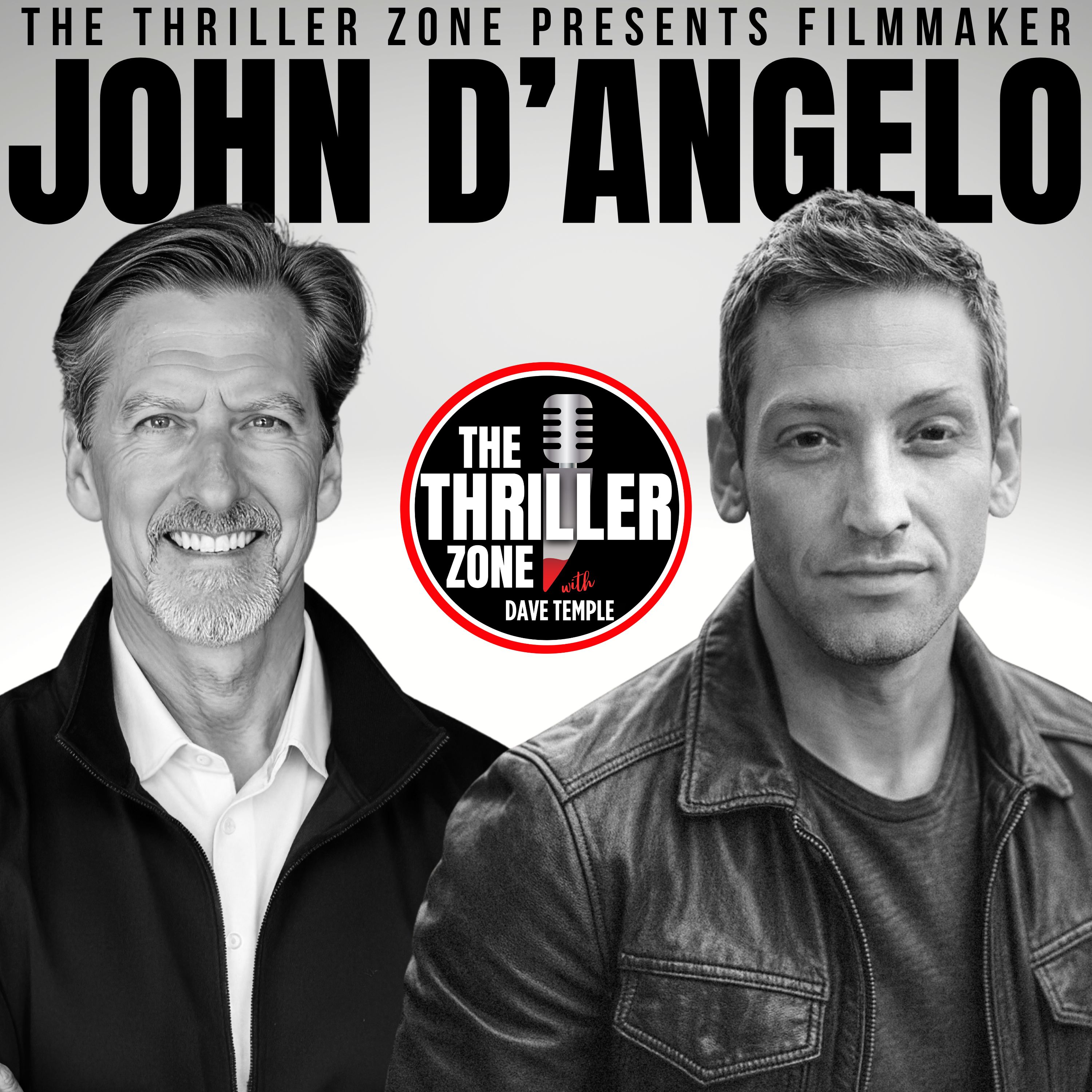


Lights, Camera, Action! John D'Angelo on Filmmaking in the AI Era


Thanks for joining us for Episode #245 of The Thriller Zone with host Dave Temple. We've got a super exciting episode lined up for you today, diving into the world of filmmaking with the talented John d' Angelo.
John’s here to share some seriously cool insights about his upcoming indie film, "The Hook," which blends classic storytelling with cutting-edge visual innovation.
If you’ve ever been curious about how filmmakers use tech like Unreal Engine and LED walls in production, you’re in for a treat! We’re also touching on the nitty-gritty of the filmmaking process, including the creative challenges and the importance of character development.
So grab your popcorn, settle in, and let’s get ready to geek out about the magic of movies with Dave & John on The TZ!
Takeaways:
- John shares his journey from a Unity fanboy to embracing Unreal Engine tech, showcasing how filmmakers are now blending traditional storytelling with cutting-edge visual innovation.
- The conversation dives into the challenges of producing films out of order, emphasizing the importance of actors capturing the right emotions to maintain narrative pacing.
- Listeners will get an inside look at how AI is revolutionizing filmmaking, making it easier to create stunning visual effects and even entire scenes without traditional methods.
- John's advice for aspiring filmmakers? Be humble, help others, and show your value without immediately pitching your own projects.
- The episode wraps up with a reminder that storytelling should come from a place of passion, not trends, encouraging creators to write what they genuinely love.
Companies mentioned in this episode:
- John d' Angelo
- Unreal Engine
- Jon Favreau
- Unity
- Fender
- Gibson
- Topaz
- Michael Jai White
- Malin Akerman
- Reddjinnpro.com
Keywords: thriller podcast, indie filmmaker interview, John DeAngelo, filmmaking insights, thriller writing, filmmaking technology, AI in film, Unreal Engine filmmaking, Chapman Dolly, film production tips, Vegas noir film, character development in film, filmmaking advice, soundscapes in film, visual storytelling, pre-visualization techniques, independent film challenges, cinematic techniques, film industry advice, creative process in filmmaking
Mentioned in this episode:
NFF with Tammy
Get my book LIFE IN TWO COLUMNS: Shit That Matters. And Everything Else. Buy it today on Amazon, or on my website: DavideTemple.com
00:00 - Untitled
00:03 - Introduction to the Thriller Zone
05:18 - The Rise of AI in Filmmaking
12:32 - Exploring the Noir Elements in 'The Hook'
20:32 - The Transition to Feature Filmmaking
32:28 - Navigating the Challenges of Filmmaking
Hello and welcome to the Thriller Zone.
Speaker AOf course, I'm your host, David Temple.
Speaker AIt is so nice to have you here.
Speaker AI cannot believe we are rolling down the end of 2025.
Speaker ACan you believe it?
Speaker AWhere has this year gone, man?
Speaker AWell, I can tell you there is still lots of juiciness still ahead for us on the Thriller Zone.
Speaker ASo all you gotta do is hang out for it.
Speaker AOn today's show, we're doing something a little bit different.
Speaker AYou know how we're always talking about thriller writers, right.
Speaker APublishers, agen, etc.
Speaker AToday I'm talking to a filmmaker.
Speaker AHis name is John d' Angelo and he's got a movie coming out called the Hook.
Speaker AHe's an indie filmmaker and he's got some really terrific insights.
Speaker AIf you like to geek out on the business of show business and Hollywood and filmmaking, you're gonna love today's show.
Speaker ASo stick with us and enjoy the show right here on the thriller.
Speaker AJohn DeAngelo, welcome to the show, buddy.
Speaker BThank you.
Speaker BThank you for having me.
Speaker BThis is great.
Speaker AYou know, I don't get a chance to talk to a whole lot of filmmakers.
Speaker AI talk to thriller writers, predominantly publishers, editors, agents.
Speaker ASo you're among like the first couple of filmmakers.
Speaker AAnd as a closet filmmaker myself, I was so excited to jump on this opportunity.
Speaker ASo I'm glad you cut aside the time.
Speaker BYeah, no, this is great.
Speaker BAnd, and it.
Speaker BThe genre of the film falls right into your.
Speaker BInto your.
Speaker BInto your bag, though, for sure.
Speaker AYeah.
Speaker AWell, I got a couple of interesting things to share with you that is going to shed some light on this.
Speaker AI want to start out of the gate with.
Speaker AJohn is a writer, director, filmmaker, as I said.
Speaker ANow here's something I was reading on your bio.
Speaker AI want you to give me some clarification.
Speaker AHe's known for blending classic storytelling with cutting edge visual innovation.
Speaker AI got a pretty good idea, that is.
Speaker ABut tell my listeners exactly what sets you apart.
Speaker BSure.
Speaker BSo when it comes to ICV effects and things like that, I think the most common popular notion is the whole Mandalorian craze that went on years back where they were using Unreal Engine and putting them on these massive LED walls.
Speaker BAnd that kind of sparked out of a necessity with Jon Favreau and his team during the whole the lockdown of COVID But it sparked a really great use of that technology.
Speaker BAnd just like many others, I kind of adapted to that craze.
Speaker BI wanted to understand the limitations of what that technology.
Speaker BLike, what's the bottleneck there?
Speaker BHow far can we take it And I was already a certified Unity game developer.
Speaker BSo I kind of had my head around the engine.
Speaker BBut for a long time, I was like anti Unreal Engine.
Speaker BFor some reason, I was just a fanboy of Unity.
Speaker BIt's silly, but it happens.
Speaker BGuitar players do it too, like Fender, Gibson, the whole thing.
Speaker BSo to make a long story short, I was comfortable in that engine space.
Speaker BBut Unity wasn't capable of getting where Unreal Engine was getting in that space.
Speaker BSo I jumped in, started studying it, fell in love with the engine, got certified in that world, and then I hit the bottleneck.
Speaker BAnd the bottleneck was the technology's there, but it's very, very, very expensive.
Speaker BSo over time, those LED panels became more accessible, they became cheaper, but they're still not quite where they need to be.
Speaker BSo I use the technology currently to do all of my previs.
Speaker BTo do all of my conceptual things.
Speaker BI build my environments entirely in unreal engine.
Speaker BIn 3D environments, I set my virtual cameras to match the cameras in the real lenses, and then I place them to the centimeter of will it be in real life.
Speaker BSo when we show up on set, there's no questions of whether or not the shot list will work physically in the space.
Speaker BThe next step is to get to the production level where there's enough funding behind it to do the LED volumes.
Speaker BBut I am ready for that when it comes.
Speaker AWell, now there's two things to unpack there, folks.
Speaker AI want to.
Speaker AI want to break this down.
Speaker AOne, I'm going to flashing back to like the late 90s or mid to late 90s, and I'm hanging out with some cats in.
Speaker AIn North Carolina, and they were doing something that is now kind of normal.
Speaker AAnd I want to make sure that I'm on the same page with you.
Speaker AThey would get in the back of a car and hang their camera out the window and shoot the.
Speaker AThe.
Speaker AThe world going by.
Speaker AThen they'd come back to their driveway, project that video up on a screen behind them, and then drive.
Speaker AAnd this was like, long time ago.
Speaker AAnd I would sit there and watch that.
Speaker ADude, that's frigging amazing.
Speaker BThe projection process.
Speaker BYeah, that's been around for as long as.
Speaker BI mean, there's some footage go way, way, way back in black and white days where they were doing this force perspective and all that kind of stuff.
Speaker BLike it was.
Speaker BYeah, that concept of being able to trick the.
Speaker BTrick the camera because you're dealing with two dimensions, and it really gives you a lot of flexibility for that.
Speaker BYeah.
Speaker AWell, one more thing.
Speaker AI want to drill down on.
Speaker AI think it's so funny now when I watch people, when I watch a scene like We'll Go True Detective the first season, and those cats are in the car and the reflections are going by on the grass or on the glass and so forth.
Speaker AAnd.
Speaker AAnd my wife, who doesn't know technology, all she goes like, where are they driving?
Speaker AThat's amazing.
Speaker AI'm like, baby, that's happening in a studio.
Speaker ANo, it's not.
Speaker ALook, the things are going by, but now, John.
Speaker AAnd this is where I want to catapult straight ahead.
Speaker ABecause you're probably waist deep in this right now with AI.
Speaker ALike it is being able to create universes out of thin air.
Speaker AHow is that changing the way you work?
Speaker AAnd you're way ahead of the curve.
Speaker BYes.
Speaker BSo AI.
Speaker BI live AI pretty much every day.
Speaker AYeah.
Speaker BAnd I keep.
Speaker BI really try and stay ahead of how far along we are in not only realism, because that.
Speaker BThat's what everyone's concentrating on.
Speaker BThat's sort of the surface level.
Speaker BLike, how real does this stuff look?
Speaker BPassing QC is a whole nother nightmare.
Speaker BRight.
Speaker BSo when you get something that can generate a realistic video, but it's pumping it out at 7:20, then you're bringing it into something like Topaz, and you're uprising it.
Speaker BYou're getting artifacts.
Speaker BThen you bring it into your editor, and then you're getting electric blacks, and there's a bunch of squares in your blacks.
Speaker BAnd then you try and put temporal on it to like make it, but then everything looks like it's made out of plastic.
Speaker BAnd then it turns into this whole.
Speaker BYou're just fighting with the limitations of the output.
Speaker BYou're not.
Speaker BYou're not fighting limitations of realism anymore.
Speaker BSo when Sora 2 dropped, the very first thing that I realized with Sora 2 was I think we're pretty much there to shoot pickups with AI.
Speaker BAnd what I mean by pickups is like, I need to get that aerial shot of a crime scene at night.
Speaker BI need to get the outside of an office building with a flag flapping in the wind.
Speaker ARight.
Speaker BYou nail those, it's pumping them out of 1080 right now.
Speaker BSoon they're going to get rid of all the little particulates and the issues that happen with artifacting.
Speaker BI'd say this time next year, I don't think a second unit is going to need to be activated on a.
Speaker BOn a film set.
Speaker BUnless the.
Speaker BUnless the actual talent is.
Speaker BIs needed for those.
Speaker BFor those pickups.
Speaker BI don't see it happening.
Speaker AIsn't it.
Speaker ACrazy times we're living in, right, bro?
Speaker BCrazy times we're living in.
Speaker BYes, but.
Speaker BAll right, I will say that.
Speaker BI just want to say one last thing on that.
Speaker AYeah.
Speaker BIt is really, though, a syndrome that we have as.
Speaker BAs a human race.
Speaker BLike, we get way ahead of ourselves.
Speaker BLike, if you.
Speaker BYou can have conversations with people right now that don't really.
Speaker BThey're not really living the space.
Speaker BAnd they could swear to you.
Speaker BWe are 24 months from being able to type.
Speaker BA lizard falls in love with a Chihuahua.
Speaker BEnter.
Speaker BAnd you get this fully animated movie about, like, engaging, changing your life movie.
Speaker BWe are so far from that.
Speaker BBut it's how you use those tools with the tools we do have that are over developed.
Speaker BLike an Unreal engine.
Speaker AYeah.
Speaker BNow we're cooking.
Speaker AOkay, well, folks, before you turn that dial, as we used to say during my radio days, before you distract your attention.
Speaker AAnd thank you for letting me geek out with John here, a fellow filmmaker.
Speaker ABut this stuff is very exciting because.
Speaker AAnd this is a conversation, John.
Speaker AI have every single solitary, freaking weak.
Speaker APeople go, oh, geez, dude, you can't use AI.
Speaker AThat's not.
Speaker AYou're cheating.
Speaker AI'm like, it's a tool.
Speaker AYou can take a knife and you can cut an apple and eat it, or you can take a knife and stab someone and kill it.
Speaker AIt's still just a tool, right?
Speaker BThat's right.
Speaker AYeah.
Speaker BThat's right.
Speaker BYep.
Speaker BAnd yeah, yeah.
Speaker BAnd I will say this too.
Speaker BI'm pretty sure there was a lot of horseshoers pretty pissed off at Ford if you go back far enough.
Speaker BJust saying.
Speaker ANice analogy.
Speaker AOkay, now that I got the chili bum cell worked out of myself, I want.
Speaker AI got like five questions.
Speaker AWe're.
Speaker AWe're tight on time.
Speaker AWe want to make sure everything grooves here.
Speaker AI know you started out as a songwriter and performer.
Speaker AI get that energy already.
Speaker ANow we're talking about your new film, the Hook.
Speaker AWhen does the Hook come out?
Speaker BSo the Hook doesn't have a release date yet, but it is looking like it's going to be next year.
Speaker BI'm hoping for a Q2, Q3, but I don't want to overstep.
Speaker BBut that'll be wherever the distributor lands it.
Speaker BYep.
Speaker AAll right, well, this is not his first rodeo, kid, so he knows what he's doing.
Speaker ABut what I want to do is how much of, like, when you're on the set.
Speaker AMusicians are a very specific breed.
Speaker AI know because I am one myself.
Speaker AWhen you are on the set, how much of that was there?
Speaker ALike, a particular Scene that you were working in, where you go, oh, you know what?
Speaker AI've already scored this thing in my head.
Speaker ADo you have the music and the film in your head going simultaneously?
Speaker ABecause it's.
Speaker BI do.
Speaker BAnd I'll tell you this, though, so.
Speaker BSo when it comes to the levels of filmmaking and productions, right, like, you have the really, really high level where, like, Guillermo del Toro doing Frankenstein, right, You're talking like, this is the.
Speaker BThis is the far end.
Speaker BYou get all the tools and the whatever when you're in that situation.
Speaker BIt's sort of like all of the pieces on set, like, gravitate to his gravity.
Speaker BThey all move to his orbit.
Speaker BRight?
Speaker AYeah.
Speaker BIf he wanted to say, literally, like, hey, look, today I'm feeling purple.
Speaker BLike, he's got 60 people trying to not only figure out what that means, but they're going to, like, articulate it somehow to the best of their ability.
Speaker BNow, why I say this is because when you're on these smaller sets, while I'm overly thankful to be on them, there's not a lot of room to be able to have those kind of, like, expressive moments where the team just sort of like.
Speaker BLike, is finding a way to see all of that vision.
Speaker BDoes that make sense?
Speaker BSo what I do to get ahead of that is I just score a soundscape.
Speaker BAnd a soundscape is like, it can't be too specific because I. I can't be like, hey, this scene, I really wanted this feeling, like, I can't do that because there's just not enough bandwidth on set.
Speaker BBut what I can do is I could score how I want the movie to feel in general.
Speaker AYeah.
Speaker BAnd then when we get to a happy moment or whatever, I don't reference it right, because it's a dark tone.
Speaker BI'm not gonna reference that during a.
Speaker BA nice scene, but I do that and I send it to the cast.
Speaker BMichael Jai, while he was on set, multiple times.
Speaker BNot only he blasted it on set through his Bluetooth speakers, he was always on his earpods, just listening to it with his eyes closed.
Speaker BSo some artists and some actors, they really do appreciate having that sort of engagement, but others could care less.
Speaker BThey're just like, yeah, tell me where to put the camp.
Speaker BLike, yeah, I don't care about your violin piece in A minor.
Speaker BJust, where's the camera going?
Speaker AIt's really.
Speaker AThough it's.
Speaker AIt's not counterintuitive.
Speaker AIt is very intuitive.
Speaker AAnd again, I'm not trying to upstage you at all.
Speaker AThis is your show.
Speaker ABut I remember I was doing My, My only real independent film that went anywhere that's on Amazon prime right now.
Speaker AI did the same thing.
Speaker AI had a buddy of mine, Kim Planner, I said, score me three tiny little pieces of music.
Speaker AJust, it's like two minutes each.
Speaker AThey don't have the attention span.
Speaker AAnd then we'd get to the set because I'm directing them.
Speaker AI'm like, now listen to this and just do this for.
Speaker ATo set the emotion.
Speaker AAnd I want to make sure I'm doing the same thing you're saying.
Speaker ASet the emotion.
Speaker ADo with it as you wish.
Speaker AYou've already got the lines memorized.
Speaker AThis is simply to embellish the moment so you can feel it.
Speaker ANow go do what you do best.
Speaker AWe're on the same page, right?
Speaker BThat's right.
Speaker BIf it, if it finds its way into their performance, great.
Speaker BNo one will ever know where or when it touched it.
Speaker ABut yeah, yeah, perfect.
Speaker ANow, one of the reasons I meant I agreed to meet with you because my next question is going to tee that up.
Speaker AAnd when I heard this about you, I'm like, dang.
Speaker AWell, first of all, he's a filmmaker.
Speaker AI gotta hang with this.
Speaker ACat number two is that I've been working on a Neo noir thriller for about two and a half years.
Speaker AI'm sending it out to agents right now, and it's based in, wait for it, Vegas.
Speaker BOkay.
Speaker ASo when I read.
Speaker ASo I'm reading your bio in your, Your press sheet, I'm like, oh, my God, I've got to talk to this cat.
Speaker ASo noir as we know, think Chinatown, for instance, usually screams, you know, rain alleyways.
Speaker AAnd yet you put the hook the movie in Vegas in August, which, besides it being probably very pleasant, temperature wise, what did Vegas give you, let's say thematically and.
Speaker AOr emotionally, that you couldn't get in a traditional, more traditional noir setting?
Speaker BWell, so I, I've.
Speaker BFirst of all, what you're saying about noir is that is.
Speaker BAnd Vegas, Vegas particularly could give you some of the best noir ever, especially if you utilize the strip.
Speaker BIf you utilize the downtown is insane for that.
Speaker BBut this movie was originally supposed to be very true Detective season one.
Speaker BThis was.
Speaker BThis was supposed to be Arkansas.
Speaker BIt was supposed to be like there was actual crocodiles.
Speaker BLike in the original concept that the, the three writers of us, we were all like kind of floating around.
Speaker BSo there was a.
Speaker BThat the final battle scene was supposed to happen on a boat.
Speaker BThe Jolly Roger, like, it was a whole thing.
Speaker BSo when we found out the limitations of the production forced us to shoot local we ended up just having to lean into what we had, and the noir thing either took a hook, a hit, or it ended up being okay.
Speaker BWell, you know, that'll be for the audience to decide when the movie comes out.
Speaker BBut it wasn't.
Speaker BThe.
Speaker BThe production, unfortunately, wasn't able to go full hip tilt into the original noir, dark Louisiana vibe we wanted to go for sure.
Speaker AOkay, well, I'm.
Speaker AI'm with you on Vegas noir.
Speaker AAnd when I started.
Speaker AYeah, when I started crafting this story, especially this.
Speaker AI've done a lot of business in Vegas, and what I like is.
Speaker AAnd, dude, I'm.
Speaker AI'm probably easily twice your age, at least.
Speaker AAnyway, so I'm sitting here thinking about old Rat Pack classic Casino, and if you take that world and you desaturate it, let's just say that for just kicks and giggles, you know, turn the color down and make it a black and white.
Speaker ADude, you're.
Speaker AYou're in the middle of noir.
Speaker BYou're really close.
Speaker BI mean, very little.
Speaker BNow it's just props and performance, and that gets you there.
Speaker BYeah.
Speaker AYeah.
Speaker AWell, I can't wait to see this.
Speaker ANow you got an ex FBI profiler in the hook now, if I'm not mistaken, had his faith, injustice kind of blown apart.
Speaker AI want you to drill down on this for me.
Speaker AUnderneath the genre and the kill count, what was that nerve or impetus that you were poking at with that character?
Speaker ASometimes, and I want to put it this way, sometimes we as thriller writers are doing our own self therapy in our books.
Speaker ASo I'm like, I want to drill down on John and find out what he.
Speaker AI'm using self therapy as a wide.
Speaker AYeah.
Speaker AWhat's he working on in this movie?
Speaker BWell, so the Malcolm Miller character that you're referring to, I would say the best way to sort of describe him was I really felt for the story to get engaged quickly, there needed to be an existing history between the characters.
Speaker BAnd I felt like that just moved things along faster on the page, and it asked more questions, early questions that I didn't have to answer right away.
Speaker BRight.
Speaker BIt's because everyone can relate to having a broken, estranged relationship with somebody, and we just assume, let the core story move forward and we'll figure out the rest as it goes.
Speaker BAnd that's really how those stories kind of.
Speaker BKind of work.
Speaker BRight.
Speaker BThe other way could have just been stick two characters together that have never met.
Speaker BThat's season one of True Detective.
Speaker BRight.
Speaker BForce these two guys, they get to know each other on the spot, that whole thing.
Speaker BBut I decided to go that way because I felt like I got more bang for my buck early on.
Speaker BCharacter centered.
Speaker BAnd when you're dealing with actors like Marlon and Michael, you have to lean into the strengths of what you've got to work with.
Speaker BAnd those guys, those two actors are just at our peak at.
Speaker BThey literally shook each other's hands and nice to meet you.
Speaker BAnd action.
Speaker BLike, they just went because of.
Speaker AWow.
Speaker BAnd that's.
Speaker BYou have to lean into those strengths when you're.
Speaker BWhen you're dealing with these budget, budget films.
Speaker BSo.
Speaker BBut now to dive down a little bit into the storyline back in the day.
Speaker BAnd this is.
Speaker BThis isn't spoiling anything.
Speaker BIn the.
Speaker BIn the.
Speaker BFor the movie.
Speaker BTen years before, in this movie, in this storyline, that character was investigating a serial abduction case, and he was telling the FBI it was serial, and they didn't want to hear a serial abduction.
Speaker BThey were just saying, there's not enough to go on on that.
Speaker BMeanwhile, at home, he was having trouble with his wife was terminal, and she was dealing with health issues.
Speaker BSo he was losing her, unraveling.
Speaker BAnd then he just sort of snapped and started to be a little too aggressive, and he lost his badge.
Speaker BSo all these years later, it turns out he was right.
Speaker BAnd at the beginning of our movie, these.
Speaker BThe FBI has to, like, put their tail between their legs and go, like, this guy that knew these cases better than anyone, we probably need to go get him back in, at least to consult.
Speaker BAnd then, of course, when they find him, he's an alcoholic and he's got an estranged relationship with his daughter because of what he went through all those years ago, losing his job and his wife and everything else.
Speaker BSo it just sort of like, that's where we meet this character at the beginning.
Speaker AWow, dude, a couple of things popped into my head.
Speaker AMay I call you dude?
Speaker ACouple things popped into my head when you're talking about this for folks who are spending their time crafting these characters on the page.
Speaker AI'm.
Speaker AI don't want to insult my listener to say that, oh, you're.
Speaker AYou're probably not getting the film speak like we're doing, but.
Speaker ABecause I know you're getting it, but like, when you're crafting the characters from the standpoint of how the camera captures the world, how it moves, how the color affects things.
Speaker AAnd the reason I say colors, I'm a huge David Fincher fan.
Speaker ASo when I take Fincher, for instance, in color painting, a scene has a particular mood.
Speaker AWhat I'm getting at is, do you find that And I don't know how long you've been doing.
Speaker AHow long you've been doing this.
Speaker AMaking films.
Speaker BMaking films.
Speaker BI've been.
Speaker BI've been creating moving pictures for 15 years.
Speaker AOkay.
Speaker BFinally got into the feature film stuff recently.
Speaker APerfect.
Speaker ASo this teased me up perfectly.
Speaker ASo what do you see differently?
Speaker AWhat do you see differently from 15 years ago to today?
Speaker ABoth from the style, meaning what the audience is being, what they get pulled to, what they get connected to.
Speaker AHow do you see that style change from 15 years ago today?
Speaker AAnd it can be.
Speaker AIt can be style.
Speaker AIt can be timing.
Speaker AIt could be material.
Speaker AIt could.
Speaker AIt could be anything.
Speaker BI think all of those are connected to the realization that what's in the frame matters more than the frame.
Speaker BSo I think that's, for me, and that was a difficult thing because for the longest time, I just worried about technically, how do I become the best technical filmmaker?
Speaker BBecause that's how I'm going to get noticed.
Speaker BThat's how I'm going to get work.
Speaker BI need my work to look as good as Fincher.
Speaker BI need my work to look as good as Anderson.
Speaker BRight?
Speaker AYeah.
Speaker BWhen you think about those kinds of things too much, I feel like your entire Persona professionally becomes about what's happening with the camera.
Speaker BAnd then you have to really question, what am I trying to do for a living?
Speaker BAm I trying to be a director of photography, or am I trying to be a director of film?
Speaker AGood.
Speaker BIf you're a director of photography, then worry about the settings, worry about your ISO, worry about all of those things, because you're going to need to understand it.
Speaker BAnd I'm a firm believer that, like, I'm a better director because I went through those processes myself.
Speaker BI'm not saying abandon those things.
Speaker BYou do need to understand how all of your departments work.
Speaker BBut I feel like detaching myself from how I create the frame technically to worrying about what's in the frame.
Speaker BAll of those things you counted off on your fingers just fall into place.
Speaker AYeah.
Speaker BA lot easier, dude.
Speaker ASo well put, man.
Speaker ASo well put.
Speaker AThank you.
Speaker ANow.
Speaker AOh, here you go.
Speaker AI'm again talking to you as a filmmaker to filmmaker.
Speaker AYou've got what I call from the little bit of deep dive I did on you and already of what I've picked up, you're.
Speaker AYou're the.
Speaker AYou're the quintessential example of creative tech brain meets storyteller brain, because.
Speaker AAnd you just said this.
Speaker AThere are guys who just focus on, hey, that camera's gotta move.
Speaker ACool.
Speaker AI'm all for cool.
Speaker AMoves.
Speaker ABut if a cool move is just for the cool move, but it doesn't inform the scene, doesn't inform the emotion, then you're.
Speaker AIt's just a cool fucking move.
Speaker AAnd yeah, big deal.
Speaker ASo.
Speaker ABut you're this, you're the great example of like creative tech, especially with this background with gaming.
Speaker AJesus.
Speaker AAnd then meeting storyteller brain.
Speaker ASo with your film the hook, what's one tech choice?
Speaker AAnd if we've already covered it, I just want to drill down one more time.
Speaker AWhat, what's a tech choice or a workflow that actually changed the way you shot Point A, point B.
Speaker AAnd what's one sexy tool you deliberately skipped because it would have just been like noise.
Speaker BNo, this is, this is a fantastic filmmaking question.
Speaker BLike, I feel like I think you could apply this question across the entire process of making movies from writing take what, what did, what did you want in a movie that was sexy and then wasn't needed?
Speaker BYou could take it all the way to post production in color.
Speaker BLike.
Speaker AYeah.
Speaker BSo this is a very, very good question.
Speaker BSo in the hook I will start with, with one of the things that we did.
Speaker BWe got a Chapman Dolly.
Speaker BAnd that was an expense that we had to fight for because most.
Speaker AWait one second, folks.
Speaker AA Chapman Dolly is a very, very big dolly that weighs a ton.
Speaker AIt's very expensive and it, it's the machine that you move that the camera sits on to make these beautiful moves.
Speaker ASorry to interrupt.
Speaker AI just want to make sure that.
Speaker BYeah, that's great.
Speaker BI probably should.
Speaker BShould have teed that up better yet.
Speaker BAnd, and the Chapman Dolly is thousands and thousands of dollars, right?
Speaker AYeah.
Speaker BAnd if I'm not mistaken, you can't even own a Chapman Dolly.
Speaker BYou have to rent them.
Speaker BRight.
Speaker BSo.
Speaker BAnd, and I say if I'm mistaken because I think overseas you can get, you can get something, but like here in the States, certainly you have to rent them.
Speaker BSo we made sure we got that because it, I would say 50% of every single shot you could possibly do when trying to achieve a high end cinematic camera.
Speaker BI mean, look.
Speaker BIs accomplished using a Chapman duck.
Speaker AYeah.
Speaker BSo the other thing that must be.
Speaker BIs that.
Speaker BSo that was a fight we had to get.
Speaker BWhat a sexy thing that I forgot, like I didn't get was I didn't go with a Steadicam operator.
Speaker AOh.
Speaker BSo now had I, if, if I could go back, would I get rid of the Chapman Dolly and instead have a Steadicam operator?
Speaker BBecause there was so much dialogue and there was a lot of walk and talks.
Speaker BArguably, yes.
Speaker BBut we weren't sure what the locations we were going to have at the time were.
Speaker BAnd if we had beautiful locations, things that we could boom over, and we could do all that kind of stuff, then, especially if we were going to build more sets on a soundstage, then the Chapman Dolly was the right decision.
Speaker BSo I don't regret the Chapman Dolly.
Speaker BWe got some absolutely stunning moments with that piece of equipment.
Speaker BBut I feel like we probably could have banged our Bang the buck a little more if we had a Steadicam operator all those days.
Speaker AYeah.
Speaker AAnd again, not to.
Speaker ANot to say my bicycle's cooler than yours, but in my film Chasing Grace, it just so happens that one of my oldest, longest grace best friends in the world, my Ride or Die, is a Steadicam operator.
Speaker AAnd fortunately, I was able to have him be a part of every little short film I made.
Speaker AAnd in this film, Chasing Grace, folks.
Speaker AAnd what that means is he puts on this rig on his body that basically absorbs the motion of the camera.
Speaker AWhat that does for you is allows you to go like John's inferring.
Speaker AYou can go through all kinds of scenes.
Speaker AYou can run down a street, you can run backwards, you can climb up over walls, and that thing is always staying liquid.
Speaker AThose guys are very good at what they do.
Speaker AThose machines are very heavy.
Speaker AAnd he'll tell you right now, at age 56, that it has now become a young man's game.
Speaker AAnother story.
Speaker AThe Chapman Dolly, on the other hand, as I said, weighs more than a car.
Speaker AAnd the reason, part of the reason they're mechanically so sound is you can roll over anything and it doesn't vibrate or.
Speaker APlus, it gives you a chance to kind of like, extend your camera up and over walls and so forth.
Speaker ASo I love hearing this kind of tech coming from a guy who is doing it right there, front and center, because it just opens the world for people who don't play in this sandbox.
Speaker ASo thank you for sharing that.
Speaker BOf course.
Speaker BAbsolutely.
Speaker BThis is great chat.
Speaker ANow, you have been around this business a while between music and bands, and now a.
Speaker AThis Vegas noir.
Speaker AAm I saying it's Michael White, but he has a Michael Kai White.
Speaker BMichael J. Jai.
Speaker AJai, Sorry.
Speaker AAnd then Malin Aerman.
Speaker AOkay, so at this stage, this is just.
Speaker AThis is getting you to reveal something about you.
Speaker AWhat still, honestly.
Speaker AAnd every director, every performer.
Speaker AAnd if you're a musician, you're a performer, you look like an actor.
Speaker ASo I'm sure you've done some kind of acting somewhere.
Speaker ASo what.
Speaker AWhat.
Speaker AWhat still honestly scares you, when you get on set and you're responsible for this entire world, the entire crew that shows up, right down to the crafty, right down to the people on the other side of the camera, what still scares you when you, right before you call action?
Speaker BCan I. I gotta be honest with you.
Speaker BWhat scares me more is not having that control.
Speaker BI, I, I feel honestly now, especially after going through.
Speaker BSo when you jump from commercial work and music video and corporate work and you're doing a ton of like national ads for brands, things like that, you're in control of every aspect of the production you can you, from dealing with the agencies to making sure everybody's fed and making sure everybody gets paid for extras at a bar.
Speaker BAll of it.
Speaker BAll of it.
Speaker BYou control everything.
Speaker AYeah.
Speaker BAnd you get, you have enough time to get ahead of things or whatever.
Speaker BWhen you're working with a production company that handles all of that, you're only given as much information as you're given.
Speaker BAnd if you can't get ahead of some of those problems, you don't know what tomorrow's gonna bring you.
Speaker AYeah.
Speaker BSo while it's a high level of stress, maybe anxiety, and it's not the sexy aspect of what we do for a living, dealing with the production side of it.
Speaker BI would say if you're, if you're a director and you're getting into the hot seat, you need to want, crave, beg for that control.
Speaker BEven if you lose four more hours of sleep during production every single night, you need to beg to have oversight over everything because it's going to be your fault regardless.
Speaker BJust know this, like if somebody doesn't, doesn't show up with a prop and you didn't know about it, it, it's on you.
Speaker BEven if you were never given the chance to get ahead of it.
Speaker BSo just get ahead of it and crave that stress.
Speaker BCrave all of that.
Speaker BSo that's my answer about the stress.
Speaker BBut I'll say the thing that terrifies me the most.
Speaker AYeah.
Speaker AIs.
Speaker BSuch a great question.
Speaker BI think probably what scares me the most is worrying about the pacing of the totality of the screenplay.
Speaker BI think that's the most nerve wracking aspect.
Speaker BI feel like making sure that an actor early in production, that's shooting out of order, who's supposed to be angry, is the right kind of angry right now.
Speaker BNot angry because it's just angry.
Speaker BWhy are they angry?
Speaker BBecause that's gonna play later in the film when you watch the final version.
Speaker BIf it's the wrong kind of angry, the Audience is gonna feel it.
Speaker BAnd I think that's the scariest part.
Speaker BYou sit there looking at the frame and you go like, this is the right emotion, right?
Speaker BI feel like this is the right emotion.
Speaker BSo that's probably the scariest part.
Speaker AYeah, boy.
Speaker ADude, that is so on it.
Speaker AI'm.
Speaker AI'm flashing back to many years ago when I'm in this same place.
Speaker AAnd you, John, you just nailed it.
Speaker AYou can have an actor, because movies are shot out of order.
Speaker AEverybody knows that.
Speaker ASo John and I could be in a scene, and I could have this righteous indignation because I'm on page 27 and I'm on day one.
Speaker ABut the scene doesn't happen until 37 minutes into the movie.
Speaker AAnd actually, that anger is supposed to be inside and quiet, and he's brooding because he's, well, you stole something from me, which.
Speaker AYou betrayed my trust.
Speaker AAll right, so what he just said.
Speaker AWhat John just said is exactly right.
Speaker AAnd I can see why.
Speaker AAnd I remember these days, like, does it match?
Speaker ABecause you can't go back and go, hold on a second.
Speaker ALet me go back and just look.
Speaker ALook at what page it is and pull up that video, would you?
Speaker ALet's go to Video Village and just see that scene from it.
Speaker ANo, you can't do that.
Speaker ASo that is so dynamite.
Speaker BAnd there's no turn.
Speaker BTurn it.
Speaker BChange emotion knob in post.
Speaker AI can get the volume up to 11, but I can't get the emotion to 11.
Speaker AYeah.
Speaker AAll right, we're gonna wrap here in one more question, but I want to ask you, is there anything that we haven't covered?
Speaker AI don't generally do this, but anything that you would like to mention about the movie, about the process, about Vegas, about what you hope people will in the thriller, writing, creating, directing world, some way you can put your fingerprint on something.
Speaker ABut before I close with a question.
Speaker BIf you wouldn't mind, I'd like to speak just a little bit, like, for.
Speaker BVery, very quickly, just to the people that are struggling to make it in this industry in general.
Speaker APlease.
Speaker BEspecially as a director.
Speaker BI think there's far too much negative content online about how difficult this industry is, how impossible it is, how much the ship has sailed, how little money you can make as a filmmaker.
Speaker BAll of these things.
Speaker BYou can watch a trillion videos right now online, and every single one of them are just youtubers sitting in front of a camera talking about the concept of where the industry is, or it's something a podcast or an interview of somebody that's been jaded because Maybe they haven't gotten where they felt like they should be in the industry, so they feel like there's a ceiling.
Speaker BAnd I want to just speak to the people with dreams of doing this very quickly and just say this, please.
Speaker BThe way in is to be humble and help.
Speaker BThat is how you get in.
Speaker BIt isn't more difficult than that.
Speaker BFind a production company.
Speaker BDon't expect anything in return up front.
Speaker BHelp.
Speaker BIf you're good at coloring, color people's movies, if you're good at music, score people's movies.
Speaker BLike anything you can do to get in the orbit of decision makers.
Speaker BAs someone with value, I'm telling you, there are still movies being made every single day at every single price budget.
Speaker BAll of them, from a hundred thousand dollars movies to $10 million movies to Blockbuster movies, over a hundred million.
Speaker BThey're all getting made every single day.
Speaker BAnd the reason you're not on those sets is, is because the people that make the decisions early don't know you're valuable.
Speaker BSo just let them know your value.
Speaker BDon't worry about your movies.
Speaker BDon't pitch your stuff unless it comes up organically.
Speaker ASure.
Speaker BStep by step by step.
Speaker BSo I just want to demystify a little bit of all this negativity online.
Speaker BThat's.
Speaker BThat's what I would like to say.
Speaker AThank you for that.
Speaker AI.
Speaker AMan, that is gorgeous.
Speaker AI appreciate that.
Speaker AAnd there's.
Speaker AI've been in and around this business since I was 16, so that's 50 years this month.
Speaker AAnd there is something I learned at my first tour of duty in Los Angeles.
Speaker AI did three tours.
Speaker AThe people who are nice and show up and just be kind will skyrocket eventually.
Speaker ABecause here's why.
Speaker APeople like to work with people they like.
Speaker AAnd I'm not oversimplifying it because you kind of just intuited that.
Speaker BThat's simple.
Speaker AShow up, be helpful, and for the love of God, don't pitch your stuff.
Speaker AHey, I've got a. I've got a screenplay right here, Bob, while.
Speaker AMr. Director.
Speaker AWhile I'm carrying your coffee for you.
Speaker AThat's so good, John.
Speaker BNow's not the time, buddy.
Speaker AYeah, good stuff.
Speaker AAll right, last question.
Speaker AWell, I always close my show with best writing advice from and.
Speaker AAnd guys like James Patterson, David Baldacci, Dean Koontz, Meg Gardner, Don Winslow.
Speaker AThese cats have been on the show, so people tune in to hear what they have to say.
Speaker ASo given that we spend most of our time with thriller writers and less with thriller filmmakers, however, that is about to change.
Speaker AWhat's your best Creative advice.
Speaker ANow you just gave me a dynamite piece of insight, but I want a piece of creative advice that people are going to walk away going.
Speaker AJohn d' Angelo said on the Thriller Zone.
Speaker AThis piece of creative advice to future media creators and this is what I'm going to take away and meditate over the weekend and make it my own.
Speaker BIt's all you, you, you have to, you must.
Speaker BIf you've heard this 50 times elsewhere, I don't care.
Speaker BThis is 51.
Speaker BYou must write what you like.
Speaker BYeah, you have to like.
Speaker BIf there's nothing else that, that I could give to advice that I can give to somebody else.
Speaker BIf, if the people in your immediate vicinity don't gravitate to what it is that you like, then either you have to change that environment or you have to succumb to being a work for hire and, and then do what other people want.
Speaker BBut if you're going to write and pursue a career that, that defines you, you're not going to do it.
Speaker BChasing trends, you're.
Speaker BNo one's that fast.
Speaker BNo one is fast enough.
Speaker BProductions aren't fast enough.
Speaker BDecision makers in this business don't move fast enough for you to make a trendy movie.
Speaker BIt just, it's impossible.
Speaker BSo you're always going to be behind the cue ball, always going to be a step behind the game.
Speaker BIf you don't just do what's you because then the industry has to keep up with you.
Speaker BAnd whether or not the timing's right for you or not, that's going to be a question of whether or not people accept and, and, and are moved by your work.
Speaker BBut you can rest, rest assure one thing.
Speaker BYou're never behind the cue ball.
Speaker BIf you're just doing stuff that means something to you, that because you are the cue ball, then you're never behind it.
Speaker AYeah.
Speaker BSo.
Speaker AAh, such words of wisdom.
Speaker BI don't know about wisdom, but they're words.
Speaker ADude, I could talk to you forever.
Speaker BSeriously, I really enjoyed this chat.
Speaker AThank you so much.
Speaker AWell folks, once again.
Speaker ANow I always say, hey, if you want to learn more, go to blah blah blah.com for the Love of me.
Speaker AI could not find your website, bro.
Speaker BOh no, that's okay.
Speaker BRed Gin Productions is my production company and you could go to redgenpro.com but that is just a production company if you're doing commercial work.
Speaker ABut okay, I did find redgen pro.com but I'm like this is not okay.
Speaker AOkay, so Red, make sure I write this down.
Speaker AIt's, it's R E, double D. Right, Jin?
Speaker BLike the genie.
Speaker BDJ I N N. Yes.
Speaker AGot it.com R E D D G I N N. Dude, this has been amazing.
Speaker AThank you so much for your time.
Speaker AI'm sure you're hustling off to some.
Speaker ASome set somewhere, doing something really impressive.
Speaker BI got another podcast, actually.
Speaker AOkay.
Speaker BLooking forward to it.
Speaker BThis is great.
Speaker AThank you so much, John.
Speaker AAnd I wish you such huge success.
Speaker BOh, thank you so much for your hospitality.
Speaker BLook forward to seeing you again soon.
Speaker AYour number one podcast for stories that thrill the Thriller Zone.